Centralization vs. Decentralization: Why This Choice Will Shape the Future of Real Estate

Property rights are the foundation of freedom. They determine who lives where, who builds wealth, and who controls the ground beneath our feet. Today, governments around the world are experimenting with rebuilding property systems upon blockchain infrastructure, and the blockchain protocol they choose will either protect those rights, or risk eroding them.
Blockchain is a shared digital ledger that records information in a way that is transparent, tamper-resistant, and not controlled by a single company or authority. Instead of data being stored in one central database, copies of the ledger are distributed across many independent computers. Once information is recorded, it cannot be quietly changed or erased, it can only be appended. This makes blockchain useful for tracking transactions, ownership, and records where verification and permanence matter. People access the blockchain through digital wallets and applications. A digital wallet holds cryptographic keys that allow a person to approve actions and prove control over assets or records. Most interactions happen through decentralized applications (dApps), which function like websites but connect directly to the blockchain rather than a company’s private database. The wallet acts as the user’s identity and permission layer, allowing them to interact with the system without traditional accounts or intermediaries.
Why Blockchain? Blockchain emerged as an option for financial rails in 2009 when trust in legacy systems got stretched too far and the Great Recession of 2008 exposed massive corruption. Ever since, people have been increasingly exposed to inflation, shifting rules, limited exit options and a rapidly devaluing dollar. Blockchain was birthed out of frustration and as a way to make ownership and transactions easier, settlement faster, more secure, and transparent, and resistant to quiet unaccountable changes. The original intent was to restore balance and accountability where traditional systems have failed miserably.
We hear the words centralization and decentralization everywhere today, especially in conversations about blockchain, and the future of finance. These concepts show up in political debates, tech circles, and policy discussions, and on very rare occasion, mainstream media. Unfortunately, most people don’t understand what they actually mean in real life or how it relates to property ownership.
Here is the simple truth
Centralized and decentralized systems of governing in this context, determine how much control individuals have over their property, their identity, their assets, and their choices.
And nowhere is this more important than in real estate as property rights are among the most legitimate and legally defendable rights individuals have.
As blockchain enters the real estate world, we are approaching a moment where society will br forced to set a direction that over time becomes increasingly difficult to reverse. This article breaks down the concepts in plain language and shows what each model could look like in the real estate industry from a 100,000-foot view.
What Centralization Really Means
Centralization means control, verification, and decision-making flow into a single authority or entity.
Social media platforms are a great example. Everyone has a customizable Facebook/Instagram/Youtube profile… but that profile can be shut down, altered, suspended, or expelled if Facebook/Meta as the authority decides they do not like what you are posting. They own the platform, and it is their right as a centralized authority with whom you have chosen to interact to shut you down if you are out of alignment with their values.
Blockchain is often spoken of under the umbrella of “decentralized,” but this is not always accurate. Blockchain can also be centralized.
A centralized blockchain can operate as one unified ledger (like one big excel spreadsheet) which is a single system where all records are stored, verified, and controlled by a central operator (Like a social media platform). The United Kingdom is actively exploring this model in its national property strategy.
In a centralized blockchain system:
- All property records live on a government-controlled ledger
- A single digital identity determines who can access that ledger
- A central payment rail (often a Central Bank Digital Currency) settles transactions
- Taxes, fees, and compliance checks are automated at the ledger level
- Buying, selling, or transferring property can be conditionally restricted or programmatically blocked.
- Surveillance capacity is significantly increased.
Yes, this model is efficient, reduces redundancy and some forms of fraud. But it also creates a single point of authority, giving one operator/entity the power to control:
- ownership
- mobility
- taxation
- compliance
- access to money
Note: The way a blockchain system is designed determines who controls records, who can change rules, and who can deny access. When existing property systems are rebuilt on blockchain infrastructure but retain centralized identity, permissioning, or enforcement, those systems remain centralized in practice. The underlying technology may change, but the power structure does not. Over time, these design choices determine whether property ownership functions as an independently held right, or as a permission that can be monitored, conditioned, or revoked. Once these architectures are implemented at scale, they become extremely difficult to reverse.
What Decentralization Really Means
Decentralization takes the opposite approach:
Power, control, and verification are distributed, not flowing into one specific authority.
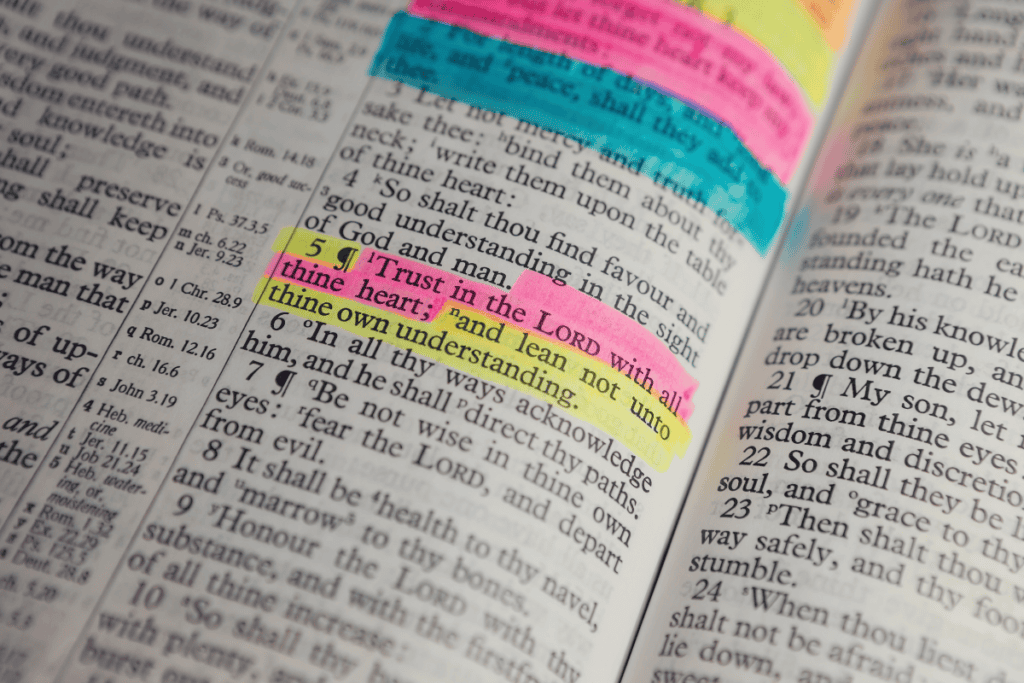
The Bible is a perfect example of decentralization. It was created by approximately 40 different authors, across 66 books, over 1500 years, with over 63,000 cross references to itself. Its message is copied infinitely and maintained voluntarily by individuals and local groups worldwide, not controlled by any central institution. This makes it completely resilient to suppression. Can you imagine someone trying to stop the Bible’s message? Many have tried. All have failed. Mature, sufficiently decentralized systems are resistant to suppression.
Instead of a single ledger, true decentralization allows many interoperable systems (like people who have maintained and distributed the Bible) to hold a copy of the ledger and work together ensuring any one party never gains complete control.
In a decentralized blockchain model:
- Individuals hold their own keys to their money and assets which exist on the blockchain – (Imagine the blockchain like lockers in a school, you have a private key to your locker which holds what is yours. Your locker also has a public identifier like “D6” that everyone can see, but only your private key can access.)
- Property rights exist independently of any one database. (They can be moved – “bridged” – from one blockchain to another)
- Transactions are peer-to-peer and executed by smart contracts, no banker, broker, or other third party is required. I can send money directly from my wallet to yours 24/7. (I don’t have to wait for the bank to open, get wiring instructions, risk wire fraud, and make sure I get the money in by 4pm if I want it sent the same day.)
- Identity can be self-sovereign and revealed in selective pieces by its owner (Like “Yes” I am over 21, or “Yes” I Live at XYZ Lane in Montana. – not controlled by one provider on a physical card which also provides my weight, eye color, address and age to anyone who sees it.
- Local communities can form governance models called DAOs. DAO’s (Decentralized Autonomous Organizations) allow neighborhoods or communities to collectively manage property rules without centralized enforcement. Kind of like digital HOAs that members control collectively as they see fit.
- Institutions must compete for trust – and just like in any market, competition keeps the entity or person serving the consumers interests best at the top.
In real estate, Decentralization removes the single point of failure and inhibits any one entity from freezing or denying access to ownership.
Most importantly, it restores the meaning of property rights to individuals instead of storing those rights inside a centrally managed structure that is vulnerable to overreach and manipulation.
The desire for freedom is inherent to humanity. Like water cutting through rock, it always finds a way. I have lived experiences that make this topic more than academic for me. I know personally that the desire for freedom can be stronger than the fear of death. That is why I care so much about this conversation. I want freedom as the default and not something we put ourselves in the position to have to fight to regain.
Scenario 1: A Fully Centralized Real Estate Industry (100,000-Foot View)
In a fully centralized future, the entire real estate system could funnel into a single unified ledger controlled by a central authority.
From 100,000 feet, that world looks like:
- One national property database
- One government-approved digital identity
- One central payment rail (likely a CBDC)
- One automated tax/compliance engine
- One authority controlling transfers and access
It’s clean.
It’s efficient.
It eliminates many forms of fraud.
But it also concentrates immense power and places it in the hands of a few very fallible humans.
In this model:
- Ownership becomes more like a license – In a centralized system, you might ‘own’ your home on paper, but if the central authority can freeze transfers, monitor transactions, or require compliance checks to sell, you’re holding a license to use property, not true ownership. The difference matters enormously.
- Access can be granted or revoked
- Transacting requires permission
- All movement of property and money is visible
- Institutions can accumulate land more easily
- Individual autonomy depends on system rules
While at first people may buy into the idea that this way is easier… they may not see the true consequences until the system is fully built.
As Milton Friedman famously said:
“Concentrated power is not rendered harmless by the good intentions of those who create it.”
Scenario 2: A Fully Decentralized Real Estate Industry (100,000-Foot View)

In a decentralized future, the architecture flips.
There is no single ledger or single point that can cause the whole to collapse.
There are many interoperable systems and like a starfish, if one arm is lost another can easily be created in its place.
In this world:
- Ownership is held directly through self-custody
- Payments move across open permissionless digital rails
- Identity is verified through selective disclosure
- Local communities can create their own governance structures
- Institutions compete for trust
- No single entity can unilaterally freeze or deny ownership at the protocol level.
- No one decides who is “allowed” to transact
It is less uniform.
But far more resilient.
And it aligns with traditional American property rights. Rights that require no gatekeeper and no behavioral compliance.
Why This Matters Right Now
Blockchain is coming to real estate.
That part is no longer a debate.
The real question is how blockchain will be used:
To centralize power?
Or to distribute it?
This choice matters because real estate is not just an asset class.
It is the foundation of:
- mobility
- stability
- generational wealth
- individual sovereignty
- economic participation
- Freedom
Final Note
While many systems are described as “hybrid,” history suggests that architectures with centralized identity, permissioning, or enforcement tend to structurally drift toward greater control over time. Power naturally accumulates where coordination is easiest. For this reason, fully decentralized systems are not simply an ideological preference, but the only structure that consistently resists long-term consolidation and preserves individual sovereignty and ownership at scale.
Balaji Srinivasan (one of my favorite educators) has repeatedly contrasted centralized authority with decentralized systems, arguing that decentralization shifts power away from concentrated states toward individuals and networks.
What can homeowners or buyers do now?
Vote with awareness of these technology choices. My state of Montana is tackling this and with SB330, SB265 and SB212 we are heading in the right direction. How about your state?
Get a self-custody wallet like Trezor and start learning how to use it.
Store your property documents offline.
Start paying attention to your state’s blockchain legislation.
Support decentralized property registries when they emerge.
Get a Yubikey and take the security of your accounts very seriously.
Clarity now prevents regret later.
We are early in the transition.
But the structures being built right now will determine the next century of property rights, for my sweet nephews, and the young children in your life, as well.
I created this blog to help people understand these two pathways clearly.
Blockchain is coming.
The question is whether its implementation will protect property ownership or quietly erode it.
Frequently Asked Questions
Is decentralized real estate realistic?
Yes. It already exists in early forms through tokenization, DAOs, and self-custody technology.
Will people lose property rights in a centralized model?
Not explicitly, but ownership becomes permissioned, monitored, and revocable.
What can homeowners or buyers do now?
Understand the models, start looking into self-sovereign digital identity, and learn the tools of self-custody early. By the time this is more mainstream you will be ahead of most people.
Stacy Adell is a Montana real estate broker (licensed as Stacy Bennin) serving Paradise Valley, Livingston, Bozeman, and Southwestern Montana. She specializes in helping buyers and sellers navigate rural Montana markets while exploring how blockchain, digital identity, and decentralized technologies are reshaping the future of real estate and personal privacy. She writes to make complex topics simple and practical. Contact: stacybennin@gmail.com.
Stacy Bennin is a licensed real estate broker in Montana, affiliated with Legacy Lands Real Estate in Paradise Valley. She specializes in helping buyers and sellers across Park County and southwest Montana find the property that fits their needs. She stays current on AI, blockchain, and emerging technology so her clients benefit from where real estate marketing, ads, and transactions are headed, not just where they have been. Contact her at (406) 224-3267 or visit stacyadell.com.