
Self-Custody for Real Estate: Why Homebuyers may Need a Digital (Blockchain) Wallet Within Five Years

Over $1 billion is stolen from homebuyers every year through email wire fraud and once it’s gone, it’s almost never recovered. Digital wallets could eliminate this risk almost entirely, and Montana’s developing blockchain legislation means Southwestern Montana could adopt them before much of the country.
Digital wallets are becoming essential in real estate not only because they dramatically reduce fraud, but they can also protect identity, and speed up closings. This shift isn’t theoretical or far away. It is actively unfolding across the country in places like California, Alabama, Arizona, and Florida, and it could reach Southwestern Montana earlier than the other parts of the U.S. because of our state’s blockchain-forward legislation.
In this guide, I’ll break down how digital wallets work, why self-custody matters, and how homebuyers in Southwestern Montana, and nationally, can prepare for the future of property ownership. Also, here is a FREE Digital Wallet Setup guide.
What a Digital Blockchain Wallet Actually Is (and What It’s Not)
A digital wallet is a secure application, that can store your identity, funds, and property-related credentials. It can be online and in physical form. It is best to have both.
It is not just a place for crypto.
It is not an app that shares your data.
It is not a replacement for your bank ( although it can be and already is for some).
A digital wallet replaces vulnerable email attachments, PDFs, and outdated document portals with verifiable, tamper-proof credentials you can fully control. All held securely within your wallet.
A modern digital wallet can and will likely eventually hold:
- Verified identity credentials (proof of your age, income, place of work, university degree, etc…)
- It could include closing instructions
- Proof-of-funds
- Title company credentials
- Digital settlement receipts
- Tokenized cash, cryptocurrencies, stablecoins
In the future, it could also hold:
- Digital IDs (self-sovereign digital identity preferably)
- Tokenized property ownership ( ownership of assets represented as a token pegged to that asset)
- Verified inspection and appraisal credentials
Why Real Estate Could Transition Towards Blockchain Wallet-Based Closings
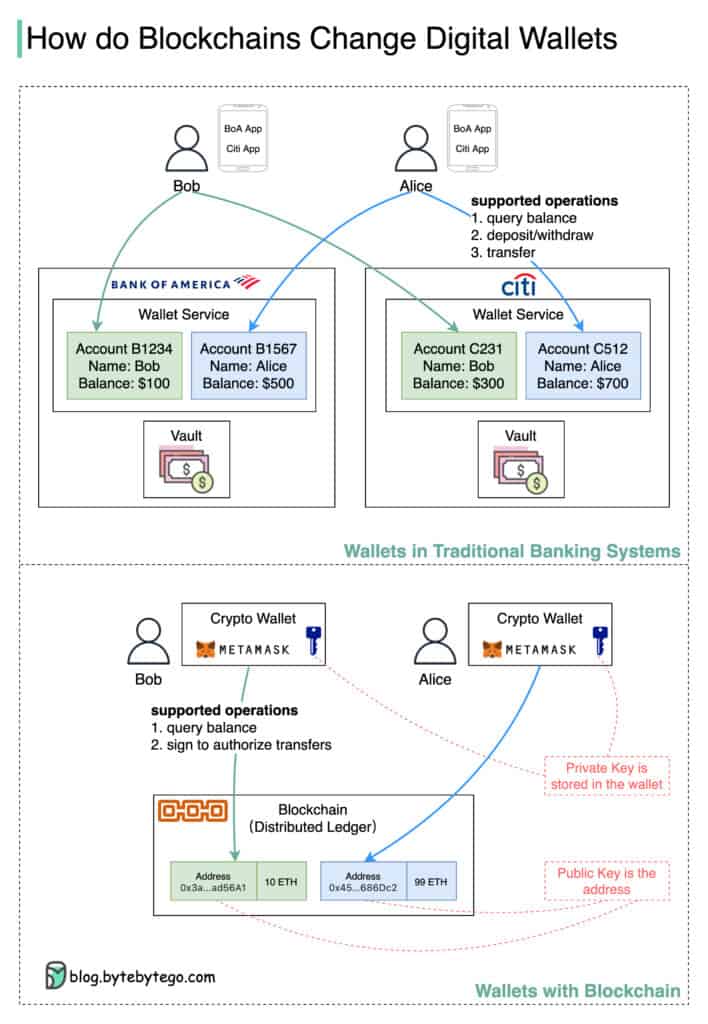
If you dig just a little deeper than mainstream media, you will find the real estate industry (and our entire financial system) is preparing for a structural upgrade: a shift away from unsecured email threads toward the opportunity for encrypted, wallet-to-wallet communication.
Here is why:
1. Wire Fraud Is Out of Control
Over $1 billion is lost annually to real estate wire fraud.
Criminals intercept email threads, change wiring instructions, and steal buyer funds with almost no chance of recovery.
**I had a transaction in October of 2025 where three properties had to close within days of each other in order for the closings to go smoothly. The buyer of the first property sent $1.8M in a wire that was unaccounted for, for four hours. Everyone thought they did everything right, but there was still a problem and the wire was lost. We were not sure if fraud had occurred, and the uncertainty was gut-wrenching for all involved, but especially the buyers. Thankfully, the money was located and pulled in by Title One in Bozeman, and everything else could proceed.
Wallet-to-wallet payments eliminate this risk because both parties are cryptographically verified. The money can be sent directly from one wallet to the other with no third party approvals or delays.
2. Identity Theft Is a Growing Threat
Traditional real estate requires buyers to email:
- Driver’s licenses
- Bank statements
- Tax returns
- Verification documents
Every upload is another exposure point.
A wallet allows one-time verification, no repeated uploads.
3. Settlement Timelines Will Shrink
Email-based workflows create delays, miscommunication, and human errors. Wallets standardize and automate the exchange of:
- Approvals
- Credentials
- Instructions
- Funds
What takes days now will take minutes later.
4. State Laws Are Adapting and Montana Is Leading
Montana is ahead of most of the country, supported by:
- SB 265 – The “Financial Freedom and Innovation Act,” a legal framework that regulates digital asset businesses and clarifies how digital assets and blockchain tech are treated under state law.
- SB 330 – Establishes a blockchain innovation task force to explore adoption and policy regulations.
- SB 212 – The “Right to Compute Act” which protects individuals’ rights to use computational tech and mandates AI risk policies for critical infrastructure.
This forward thinking legislation makes Southwestern Montana a prime early adopter.
The Problems Digital Wallets Solve for Homebuyers
Wire Fraud Risk
In rural markets like Southwestern Montana, where buyers often communicate remotely, email interception is even easier for criminals. Wallet-based transfers remove the risk entirely.
Identity Exposure
Documents change hands multiple times in a traditional transaction. With a wallet, verification can occur without ever sharing the raw data.
Lack of Speed
Out-of-town buyers (common across Paradise Valley, Livingston, and Bozeman) often experience delays due to extra layers of communication. Wallet systems solve this instantly.
How Digital Wallets Function in a Real Estate Transaction
Your digital wallet holds three essential categories:
1. Identity Credentials
This can include:
- Digital driver’s license equivalents
- KYC/AML credentials
- Verified buyer identity tokens
These can confirm you are who you say you are without exposing your private information.
2. Funds
In the future, wallets could securely hold tokenized funds for near-instant settlement – a model already being explored globally. They also hold…
- Stablecoins
- Cryptocurrencies
- Digital dollars
This also mitigates wire fraud.
3. Property Credentials
Eventually, this includes:
- Ownership records
- Title commitments
- Appraisal verification
- Closing instructions
All controlled by you, rather than a layer of third parties.
Hot Wallets vs. Cold Wallets for Real Estate
Hot Wallets (Everyday Use)
Examples: Metamask, Coinbase Wallet, Trust Wallet.
Use these for:
- Receiving credentials
- Signing closing instructions
- Authorizing payments
Cold Wallets (Long-Term Security)
Examples: Trezor, Ledger, These are detached from your desktop entirely. They are small devices you can hold in your hand.
Use these for:
- Storing identity credentials
- Storing long-term property documents
- Be sure to Protect your seed phrases
The Ideal setup:
Hot wallet for the transaction. (connects to internet)
Cold wallet for secure, long-term storage. (does not connect to internet)
Also ideal is to have one separate device that holds your wallets and access to financial accounts, one you never search the internet with other than for those specific reasons. This decreases your chances of being hacked significantly. If you want even more security invest in a yubikey.
How a Future Wallet-Based Closings Could Work
Here’s a simple version of how real estate closings will function five years from now:
- Buyer downloads a digital wallet – if they don’t already have one.
- Lender issues a digital proof-of-funds credential.
- Title company issues a verified identity credential.
- Buyer stores both credentials in their wallet.
- Closing instructions are delivered through the wallet.
- Buyer authorizes payment wallet-to-wallet.
- Title company issues a digital settlement receipt or ownership credential.
This eliminates:
- Email vulnerabilities
- Unsecure document portals
- Slow communication
- Wire fraud risk
Why Self-Custody Matters for Property Ownership
Self-custody means you control who sees what aspects of your identity are necessary, digital money, and ownership credentials, rather than a third party.
Benefits:
- Protection from data breaches
- Control over your personal information
- Ownership of your financial tools
- No dependency on centralized platforms
- Long-term sovereignty over identity and property records
As real estate digitizes, self-custody could become a new option.
The Alternative: Custodial Wallets
Many platforms will offer ‘custodial’ wallets where they hold your keys for you – similar to how banks hold your money. While more convenient, this recreates the same dependency problem we’re trying to solve. In a custodial wallet:
- The platform controls your access
- Your account can be frozen
- You’re trusting a third party with your property credentials
Self-custody means YOU hold the keys. It’s more responsibility, but it’s also true ownership.
Why Southwestern Montana Will Adopt Wallet Closings Early
Southwestern Montana is uniquely positioned because:
- We attract remote buyers moving from larger tech-forward cities.
- We already rely heavily on digital communication across long distances.
- Montana legislation supports decentralized, blockchain-based systems.
- Rural transaction challenges (distance, delays, reliance on email) make wallet-based systems an obvious upgrade.
This region could become among the handful of states in the country to adopt widespread wallet-based real estate workflows.
What Buyers Can Do Now
Here are simple steps to prepare:
- Download a beginner-friendly hot wallet (Coinbase Wallet or Base Wallet are great starters).
- Purchase a cold wallet for long-term safety (Trezor or Ledger).
- Store your seed phrase offline in multiple safe places. (AND NEVER IN ANY DIGITAL FORM INCLUDING A PHOTO OR PASSWORD MANAGER – These leave you vulnerable to being hacked)
- Practice sending small test transactions.
- Learn how to verify official credentials.
- Begin storing identity-related credentials safely.
The sooner you learn these tools, the safer your next transaction could be. For more information check out this article I wrote about digital wallets.
Frequently Asked Questions
Do I need a digital wallet to buy a home in Montana today?
Not yet. But adoption is accelerating, especially for secure settlements.
Are digital wallets really safer than wiring money?
Yes. Wallet-to-wallet payments eliminate email-based fraud vulnerabilities.
Will real estate payments be made in stablecoins?
Almost certainly. Stablecoins are fast, programmable, and final.
What happens if I lose my seed phrase?
Your wallet can’t be recovered. Secure storage is critical.
Which wallet should a beginner start with?
A simple hot wallet (like Coinbase Wallet) plus a Ledger or Trezor for long-term storage.
Conclusion
Digital wallets could become standard in every real estate transaction nationally and here in Southwestern Montana in the next 2-5 years. They offer stronger security, faster closings, and full control over your identity and assets. States like Montana are ahead of the curve, making this one of the best regions to adopt wallet-based systems early.
Whether you’re buying your first home or exploring how technology is reshaping property rights, understanding digital wallets today will prepare you for the real estate world of tomorrow.
About the Author
Stacy Adell is a Montana real estate broker (licensed as Stacy Bennin) serving Paradise Valley, Livingston, Bozeman, and Southwestern Montana. She specializes in helping buyers and sellers navigate rural Montana markets while exploring how blockchain, digital identity, and decentralized technologies are reshaping the future of real estate and personal privacy. She writes to make complex topics simple and practical. Contact: stacybennin@gmailcom.
Stacy Bennin is a licensed real estate broker in Montana, affiliated with Legacy Lands Real Estate in Paradise Valley. She specializes in helping buyers and sellers across Park County and southwest Montana find the property that fits their needs. She stays current on AI, blockchain, and emerging technology so her clients benefit from where real estate marketing, ads, and transactions are headed, not just where they have been. Contact her at (406) 224-3267 or visit stacyadell.com.