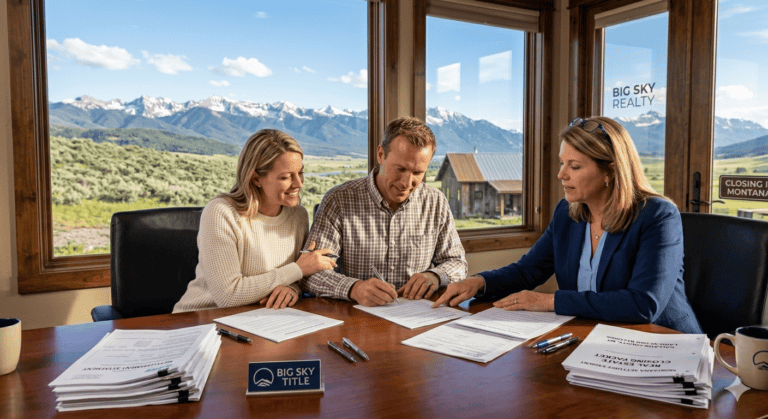
The Hidden Link Between Oil Prices and Real Estate
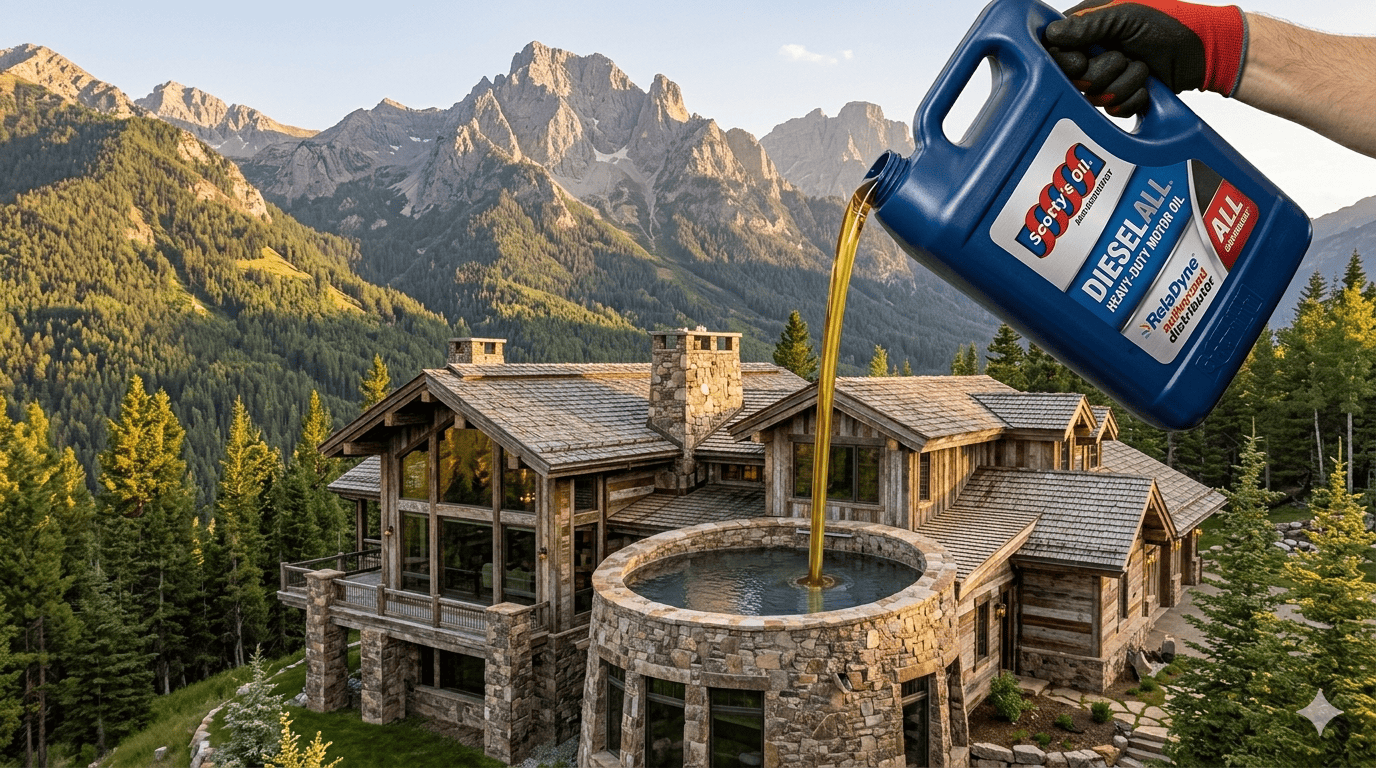
The hidden connection between fuel costs and real estate that most buyers never think about
Most people check gas prices at the pump and move on with their day. What they don’t realize is that the same force driving up the cost of a gallon of diesel is quietly driving up the cost of buying, building, and owning a home.
Oil prices don’t just affect your commute. They affect your mortgage rate, your building materials, your heating bill, your closing costs, and even whether the home you want gets built at all.
Here’s how that chain reaction works and why it matters if you’re buying or selling property in Montana.
The chain reaction: oil to inflation to mortgage rates
The connection between oil and real estate isn’t direct rather it moves through a series of dominoes. Understanding the sequence makes it easier to see why a conflict overseas or an OPEC production cut can change what you pay for a house in Livingston.
Oil prices rise → everyday costs rise → inflation rises → the Federal Reserve holds or raises interest rates → mortgage rates stay elevated → buyers can afford less → the market slows down.
That’s the short version. Energy costs feed into nearly every sector of the economy. When fuel gets more expensive, it costs more to transport goods, heat buildings, run equipment, and manufacture materials. Those costs get passed along to consumers. When enough of those costs rise at once, that’s inflation, and inflation is the single biggest factor the Federal Reserve watches when deciding what to do with interest rates.
Higher interest rates mean higher mortgage rates. And higher mortgage rates mean a buyer who qualified for a $400,000 home six months ago might only qualify for $350,000 today. This is not because their income changed, but because the cost of borrowing did.
Construction costs feel it first
Before a house even hits the market, oil prices have already shaped what it costs to build.
Lumber, steel, concrete, roofing materials, insulation … all of these supplies gets transported by truck, rail, or ship. Every one of those runs on fuel. When diesel prices climb, the cost of moving a load of lumber from a mill in western Montana to a job site in the Gallatin Valley goes up with it.
Then there’s the equipment. Excavators, bulldozers, concrete trucks, generators which means construction runs on Diesel Grease and Oils. A sustained increase in fuel costs doesn’t just add a line item to a builder’s budget. It changes whether a project pencils out at all.
For Montana specifically, where distances between suppliers, job sites, and population centers are significant, transportation costs hit harder than they do in more densely built markets. A subdivision that was viable at $3.50 diesel might not be viable at $5.00.
Heating costs change the math on homeownership
Montana winters aren’t optional, and neither is heating your home through them. For properties running on propane or heating oil (which is common in rural areas of the state) a spike in oil prices translates directly into higher monthly costs for homeowners.
That matters for buyers doing the math on affordability. The mortgage payment is only part of the picture. When heating costs jump, the total cost of ownership rises, and some buyers either pull back or look for smaller, more efficient properties.
For sellers, it means a home’s energy efficiency becomes a more meaningful selling point during periods of high fuel costs. An energy-efficient home that was a nice bonus in a low-oil-price environment becomes a competitive advantage when propane is expensive.
Rural markets feel it differently
In urban or suburban markets, the oil-to-real-estate connection is real but somewhat buffered by density, public transit options, and diversified economies. In rural Montana, the effect is more direct.
Longer commutes mean more fuel consumption per household. Propane and heating oil dependence is higher. Construction supply chains are longer. And the local economy often has closer ties to industries such as agriculture, ranching, timber are themselves sensitive to energy costs.
When fuel goes up, the cost of running a ranch goes up. Feed costs rise because transportation costs rise. Equipment costs rise. And when operating costs rise across the board, it affects land values, because the economic productivity of that land is directly tied to what it costs to work it.
What this means for buyers and sellers right now
Keeping an eye on oil prices isn’t just for commodities traders. For anyone in the real estate market, energy costs are a leading indicator of where things are heading.
For buyers: When oil prices are climbing, expect mortgage rates to stay firm or rise. That’s not a reason to panic, but it is a reason to get pre-approved sooner rather than later and to factor in heating and commuting costs when calculating what you can actually afford, not just what the bank says you qualify for.
For sellers: Higher energy costs can slow buyer activity, especially in rural markets where the impact is more pronounced. Pricing realistically and highlighting energy efficiency like newer windows, insulation, efficient heating systems becomes more important when buyers are watching every dollar.
For anyone watching the market: The relationship between oil and real estate isn’t new. Historically, major oil price spikes have preceded economic slowdowns with remarkable consistency. That doesn’t mean every increase leads to a downturn, but it does mean paying attention to energy markets gives you a better read on where the housing market is likely to go next.
The bottom line
Real estate doesn’t exist in a vacuum. The price of oil touches every part of the transaction, from the materials that build the house, to the fuel that heats it, to the interest rate on the loan that pays for it. Understanding that connection doesn’t require an economics degree. It just requires paying attention to the bigger picture.
When fuel goes up, everything goes up. And for anyone buying, selling, or owning property in Montana, that’s not abstract, rather it’s the difference between a deal that works and one that doesn’t.
Frequently Asked Questions
How do oil prices affect mortgage rates?
Oil prices drive up transportation, manufacturing, and energy costs across the economy. When enough of those costs rise at once, inflation follows. The Federal Reserve responds by holding or raising interest rates, which pushes mortgage rates higher. A buyer who qualified for $400,000 six months ago might only qualify for $350,000 today.
Why do construction costs go up when fuel prices rise?
Lumber, steel, concrete, roofing, and insulation all travel by truck, rail, or ship. Every one of those runs on fuel. Equipment on the job site runs on diesel. In Montana, where distances between suppliers and job sites are significant, a sustained increase from $3.50 to $5.00 diesel can make an entire subdivision financially unviable.
Does the price of oil affect rural real estate more than urban?
It does. Rural markets lack the buffers that density and public transit provide. Commutes are longer. Propane and heating oil dependence is higher. Supply chains stretch farther. Agriculture, ranching, and timber operations are all sensitive to energy costs, which directly affects the economic productivity and value of the land.
Should I factor heating costs into my Montana home budget?
Absolutely. The mortgage payment is only part of the picture. Many rural Montana homes run on propane or heating oil, and a spike in oil prices translates directly into higher monthly costs. Factor in heating, commuting, and maintenance when calculating what you can actually afford, not just what the bank approves.
Stacy Bennin is a licensed real estate broker in Montana, affiliated with Legacy Lands Real Estate in Paradise Valley. She specializes in helping buyers and sellers across Park County and southwest Montana find the property that fits their needs. She stays current on AI, blockchain, and emerging technology so her clients benefit from where real estate marketing, ads, and transactions are headed, not just where they have been. Contact her at (406) 224-3267 or visit stacyadell.com.