What Should Out-of-State Buyers Know Before They Start Looking in Montana?
The things that trip up relocating buyers aren’t in the MLS photos.
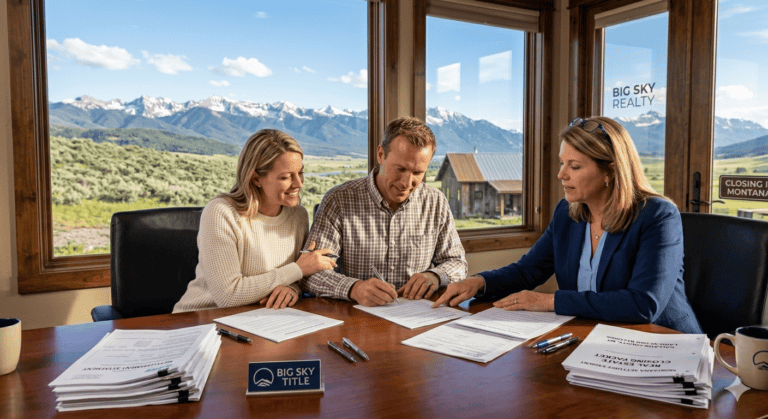
If you are sitting in another state right now, browsing Montana listings on your phone between meetings, you already know the scenery is worth the move. What you probably do not know is how different the buying process feels once you cross the state line. Montana has no sales tax, no deed transfer tax, and relatively low property taxes. But it also has water rights that do not automatically transfer with the land, wildfire insurance markets that are tightening by the year, and rural due diligence requirements that your home state likely never mentioned. This guide covers the things most out-of-state buyers wish they had known before their first offer, not after.
The short answer: Montana rewards buyers who do their homework before they start shopping. The biggest surprises are water rights (they do not automatically come with the property), the new two-tier property tax system (second homes pay nearly double the primary residence rate), wildfire insurance availability in rural areas, and the fact that rural due diligence covers ground that suburban buyers have never had to think about. Get clear on these before you tour a single property, and you will avoid the mistakes that cost relocating buyers tens of thousands of dollars.
How Does Montana’s Property Tax System Work for Out-of-State Buyers?
Montana restructured its property tax system for 2026, and the change matters more to out-of-state buyers than to anyone else. Primary residents who live in their home at least seven months per year qualify for a reduced homestead rate that can cut their tax bill by roughly 18%. Second-home owners pay a flat 1.9% rate on the full assessed value, with no tiered reduction.
Here is what that looks like in practice. On a home assessed at $500,000, a primary resident might pay around $3,500 per year in property taxes. A second-home owner would pay closer to $5,700 on the same property. That is a $2,200 annual difference that compounds every year you own the place.
The application deadline matters. To qualify for the homestead rate, you need to apply by March 1 of the tax year. If you close on a Montana home in April and plan to make it your primary residence, you will not get the reduced rate until the following year.
One thing working in your favor: Montana has no state sales tax and no local sales taxes. Depending on where you are moving from, the overall tax burden may still feel lighter, even at the higher second-home property rate.
What to do: Before you buy, decide whether the property will be your primary residence or a second home. That single decision affects your annual tax bill by thousands of dollars.
Why Do Water Rights Matter So Much in Montana?
Water rights in Montana are property rights, separate from the land itself, and they do not automatically transfer when you buy a property. The state operates under the prior appropriation doctrine, which means water use is governed by priority dates, some stretching back to the late 1800s. A senior water right from 1887 is worth dramatically more than a junior right from 2005, because in a drought year, senior rights get fulfilled first.
The Montana Department of Natural Resources and Conservation (DNRC) manages all water rights in the state. Every water right has a record in the DNRC Water Rights Query System, and buyers can search that database before making an offer.
Here is where it gets complicated. A seller can legally sever water rights from the land and sell them separately. That means the property you are looking at may have historically irrigated 40 acres of hay ground, but the water right that made that possible might have been sold to a neighbor three years ago. The listing will not always make this clear.
Montana State University Extension publishes a practical guide to water rights that covers the basics of how the system works. For any rural property with wells, irrigation, or creek access, pulling the DNRC records should be a non-negotiable step in your due diligence.
What to do: Before you make an offer on any rural property, search the DNRC database for the parcel and confirm which water rights are attached. Ask your broker to include water rights language in the purchase agreement.
What Is Happening with Wildfire Insurance in Montana?
Montana home insurance costs rose 18% in 2025, pushing the statewide average annual premium to roughly $2,399 per year. The driving factors are wildfire risk, hail exposure, rising construction costs, and a shrinking pool of insurers willing to write policies in high-risk areas.
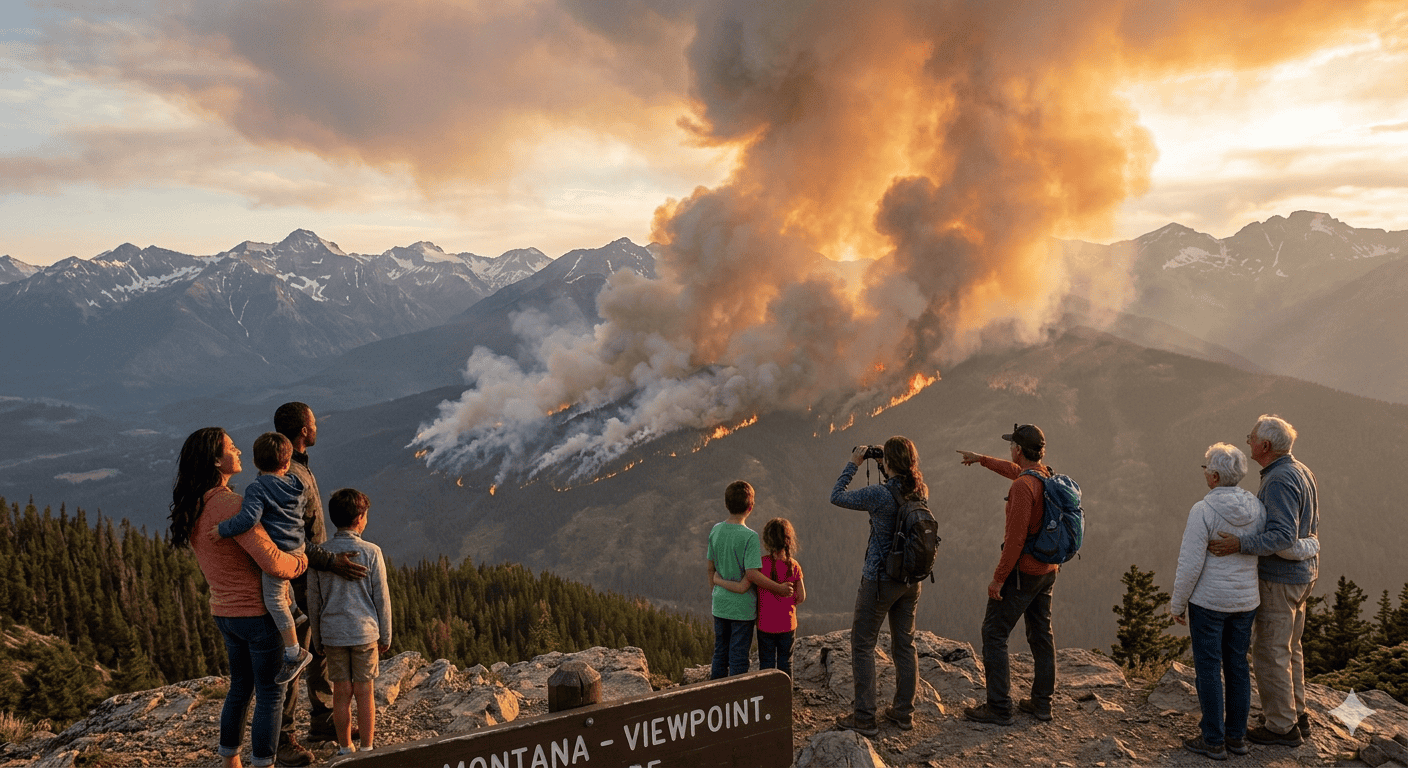
Nearly 29% of Montana properties carry high wildfire risk, the highest percentage of any state in the country. Rural properties in timbered areas, properties with wood-frame construction, or homes that rely on wood stoves face the steepest premiums and the hardest time finding coverage.
Montana does not have a FAIR Plan (Fair Access to Insurance Requirements), which means there is no state-backed insurer of last resort. If private insurers decline to cover a property, you are on your own finding alternatives. The Montana Commissioner of Securities and Insurance publishes resources on fire insurance, but the practical reality is that some rural properties are becoming difficult to insure at any reasonable price.
The Montana Legislature passed HB 533 in 2025 to revise insurance laws related to wildfire and real property, and the Economic Affairs Interim Committee is studying the issue through September 2026. Changes may be coming, but they are not here yet.
What to do: Get insurance quotes before you finalize your offer, not after. If a property is in a Wildland-Urban Interface zone, ask your insurance agent specifically about wildfire coverage and whether the insurer has a history of non-renewing policies in that area.
What Does Rural Due Diligence Actually Involve?
If you have only bought property in a city or suburb, Montana’s rural due diligence list will look unfamiliar. A typical suburban inspection covers the roof, foundation, HVAC, and plumbing. A rural Montana inspection adds septic systems, wells, water rights, access easements, floodplain status, and sometimes soil quality.
Septic systems. Most rural Montana properties are not on municipal sewer. The Montana DEQ Circular 4 sets statewide standards for on-site wastewater treatment, but counties enforce their own rules that must meet or exceed the state minimum. A failing septic system can cost $15,000 to $40,000 to replace, depending on the site conditions, so inspection is not optional. Verify current replacement costs with local contractors, as terrain, soil type, and distance from the road can push costs well beyond typical ranges.
Access. Not every Montana property fronts a public road. Some are accessed through easements across neighboring land. Those easements need to be recorded, current, and specific about who maintains the road. An unrecorded handshake agreement from 1992 is not something you want to discover after closing.
Zoning. Park County has seven zoning districts with different rules about what you can build, how land can be subdivided, and what uses are permitted. Some buyers assume rural Montana means no zoning. That is not accurate. Check with the Park County Planning Department before you buy, especially if you plan to build an accessory dwelling, run a short-term rental, or subdivide.
What to do: Budget more time and money for due diligence than you would in your home state. A rural Montana inspection with septic, well, and water rights review typically takes longer and costs more than a standard suburban inspection.
How Have Buyer-Broker Agreements Changed?
Since August 2024, the NAR settlement requires buyers to sign a written agreement with their agent before touring properties. This is a national change, but it affects out-of-state buyers in Montana particularly because many are used to casually meeting agents at open houses without any formal agreement in place.
The written agreement must specify, in clear terms, how much compensation the buyer’s agent will receive and from what source. Offers of compensation are no longer displayed on MLS listings in Montana’s regional MLS. That means you can no longer assume the seller is paying your agent’s commission. It may come out of your pocket, be negotiated as part of the offer, or be handled some other way entirely.
The Montana Association of Realtors has published guidance on how these agreements work in practice. The short version: read the agreement before you sign it, understand what you are agreeing to pay, and do not assume that “the seller pays the commission” is still how things work.
What to do: Before you contact any Montana agent, understand that you will be asked to sign a buyer-broker agreement. Know what questions to ask about compensation structure before your first tour.
What Does Montana Require Sellers to Disclose?
Montana law (MCA 70-20-502) requires sellers to disclose any adverse material facts about the property that they actually know about. The key phrase is “actual knowledge.” Montana is not a state where sellers are required to go investigate potential problems. They only have to tell you about problems they already know exist.
That distinction matters. A seller who never tested for radon does not have to disclose radon levels. A seller who never had the well water tested does not have to disclose water quality issues. The disclosure protects you from known, hidden problems, not from unknown ones.
Beyond the general disclosure, Montana requires separate disclosures for mold, lead-based paint (homes built before 1978), and environmental hazards like underground storage tanks. Water rights and easements that affect the property must also be disclosed if the seller knows about them.
If the seller does not provide the disclosure statement before you sign the purchase agreement, you have three days after receiving it to cancel the transaction.
What to do: Do not rely solely on the seller’s disclosure. In Montana, the burden of discovery is on the buyer for anything the seller did not know about. That means independent inspections, water tests, and title research are your safety net.
A Common Scenario We See
Consider a buyer relocating from Colorado who finds a 20-acre property outside Emigrant listed at $625,000. The photos show the Absaroka Range in the background, a renovated farmhouse, and green irrigated pasture. Everything looks right.
During due diligence, three things surface. First, the irrigation water right was severed from the property five years ago and sold to a downstream neighbor. Without it, the pasture will not stay green. Second, the property is accessed through an easement across a neighbor’s land, but the easement does not specify winter maintenance. The buyer would be responsible for plowing a quarter-mile of private road. Third, two insurance companies decline to quote the property because of its proximity to timbered hillside, and the third quotes an annual premium of $4,800.
None of these are dealbreakers on their own. But together, they change the math on the property by tens of thousands of dollars. The buyer who discovers them before making an offer has leverage to negotiate. The buyer who discovers them after closing does not.
Note: This scenario is a hypothetical composite based on common issues we see in Park County transactions. Replace with a real client story if one is available.
[INSERT IMAGE HERE: montana-property-tax-comparison-table.png]
Quick Reference: Out-of-State Buyer Checklist
| Due Diligence Item | Why It Matters | Where to Check |
|---|---|---|
| Property tax classification | Second homes pay nearly double the primary residence rate | Montana Dept. of Revenue |
| Water rights | Do not transfer automatically with the land | DNRC Water Rights Query System |
| Wildfire insurance | 29% of MT properties are high wildfire risk; no state backstop | Get quotes before offering |
| Septic system | Replacement costs: $15,000-$40,000+ depending on site | County sanitarian / DEQ |
| Access easements | Some properties lack public road access | Title company / survey |
| Zoning restrictions | Rural does not mean unregulated | County planning department |
| Buyer-broker agreement | Required before touring any property | Your agent |
| Seller disclosure | Only covers what seller actually knows | Independent inspections |
What Are the Honest Tradeoffs of Buying in Montana from Out of State?
The advantages are real. Montana has no sales tax, relatively low property taxes for primary residents, strong property rights protections, and (in most areas) far less regulatory friction than states like California or Colorado. The quality of life in places like Paradise Valley and the Yellowstone River corridor is difficult to replicate elsewhere.
The tradeoffs are also real. Rural properties require more due diligence, more specialized knowledge, and more patience than suburban transactions. Insurance markets are tightening, especially in wildfire-prone areas. The distance makes it harder to attend inspections, meet with contractors, and evaluate properties in person. And Montana’s population growth over the past five years has pushed prices up meaningfully in desirable corridors, particularly between Livingston and Bozeman.
The buyers who end up satisfied are usually the ones who treated the search like a project, not a vacation. They did their homework before their first visit, hired local professionals who knew the specific area, and budgeted time for due diligence that their home state would not have required.
Next Steps
If you are seriously considering a move to Montana, here is where to start:
If you are 12+ months out: Read the research. Start with the DNRC water rights overview and the Montana Department of Revenue property tax page. Understand the financial landscape before you fall in love with a specific property.
If you are 6-12 months out: Get pre-approved for financing (rural Montana properties sometimes need specialized lenders), start getting insurance quotes for the areas you are considering, and connect with a broker who works the specific corridor you care about.
If you are ready now: Reach out. A 15-minute phone call can save you months of misdirected searching. Contact Stacy Bennin at (406) 224-3267 or through stacyadell.com.
Frequently Asked Questions
Do I need to visit Montana before making an offer?
You do not legally need to visit, but most experienced brokers strongly recommend it. Photos and video miss critical details like road noise, neighbor proximity, wind exposure, and the actual condition of access roads. A property that looks perfect online may feel different in person. Plan at least two visits: one to narrow your search and one for serious evaluation of your top choices.
How long does a typical Montana closing take for out-of-state buyers?
Most Montana residential closings take 30 to 45 days from accepted offer to closing. Rural properties with complex water rights, survey requirements, or septic inspections can take 60 days or longer. Out-of-state buyers should plan for the longer end of that range because coordinating inspections and document signing remotely adds time.
Can I close on a Montana property remotely?
Yes. Montana allows remote closings using notarized documents, and many title companies now offer remote online notarization (RON). Your broker and title company can coordinate the process so you do not need to fly in for the closing itself, though you will need a notary in your home state if RON is not available.
What financing works best for rural Montana property?
Conventional mortgages work for most residential properties. For raw land, large acreage, or properties without conventional utilities, you may need a portfolio lender, a USDA Rural Development loan, or a land-specific lender. Properties over 40 acres often fall outside standard underwriting guidelines. Get pre-approved with a lender who has experience with rural Montana transactions, not just a national online lender.
Does Montana have a state income tax?
Yes. Montana’s top individual income tax rate is 5.9% as of 2026, applied to income over $20,500. There is no standard deduction phase-out based on residency status. If you earn income in Montana, you will owe Montana income tax on that income regardless of where you live. The tradeoff is that Montana has no sales tax, which partially offsets the income tax burden depending on your spending patterns.
How do I find a broker who actually knows the area I care about?
Montana is geographically large, and expertise is local. A broker who knows Bozeman may not know Paradise Valley, and a broker who sells subdivisions may not understand ranch transactions. Ask specifically about their recent transactions in your target area, whether they handle rural due diligence (water rights, septic, access), and how many out-of-state buyers they have worked with in the past year.
What is the biggest mistake out-of-state buyers make in Montana?
The most expensive mistake is skipping due diligence items that do not exist in their home state. Water rights, septic systems, access easements, and wildfire insurance are the four areas where out-of-state buyers most often get surprised. The second biggest mistake is assuming that online listings show everything. They do not. MLS photos will not tell you about a severed water right, an unrecorded access dispute, or an insurance market that will not cover the property.
Is it better to buy in Livingston or Bozeman?
That depends on your priorities, budget, and tolerance for growth. Livingston offers lower prices, a smaller-town feel, and direct access to Paradise Valley and the Yellowstone River. Bozeman offers more amenities, a larger job market, and proximity to Big Sky. The Bozeman Pass commute between the two is about 30 minutes in good weather and considerably longer in winter storms. For a detailed comparison, read Livingston vs Bozeman: Where Should You Buy in 2026? on stacyadell.com.
Stacy Bennin is a licensed real estate broker in Montana, affiliated with Legacy Lands Real Estate in Paradise Valley. She helps buyers and sellers across Park County and southwest Montana find property that fits their needs, and stays current on AI and emerging technology so her clients benefit from where real estate is headed, not just where it has been. Reach her at stacyadell.com or (406) 224-3267.