What Are the Most Expensive Mistakes Out-of-State Buyers Make in Montana?
Ten errors that cost real money, ranked by how often they happen and how much they hurt.
Most out-of-state buyers who get into trouble in Montana did not make one dramatic bad decision. They skipped one investigation, assumed one thing worked the same way as their home state, or trusted one online estimate that turned out to be wrong. The damage is always financial. A failed septic system is $25,000. An unresolved water rights issue can make a property unsellable. An insurance surprise in a wildfire zone can add $5,000 per year to your carrying costs.
These are not rare edge cases. They happen on a regular basis to smart, careful people who simply did not know what they did not know about buying property in Montana.
The short answer: The most expensive mistakes involve water rights, septic systems, access easements, wildfire insurance, and the assumption that Montana real estate works the same way as wherever you came from. Every item on this list is preventable with the right due diligence, and every item on this list has cost at least one of my clients (or someone they know) real money.
Early Comparison: The 10 Mistakes at a Glance
| # | Mistake | Typical Cost | Prevention |
|---|---|---|---|
| 1 | Skipping the water rights investigation | $10,000-$100,000+ | DNRC records search + water rights attorney |
| 2 | Not inspecting the septic system | $8,000-$40,000+ to replace | Pre-purchase septic inspection ($300-$500) |
| 3 | Ignoring access easement details | $5,000-$50,000+ in legal fees | Title search + attorney review of easement language |
| 4 | Not getting a wildfire insurance quote first | $2,000-$6,000+/year ongoing | Request quote before making offer |
| 5 | Trusting Zillow in a non-disclosure state | Overpaying by $20,000-$80,000 | Work with a local broker who has MLS data |
| 6 | Skipping the well water test | $5,000-$30,000 for new well | Well flow test + water quality test ($300-$800) |
| 7 | Buying on summer emotions | Regret, potential resale loss | Visit in January before committing |
| 8 | Overlooking covenants and deed restrictions | Fines, forced compliance, legal fees | Read CCRs in full before closing |
| 9 | Not checking the floodplain status | Mandatory flood insurance ($1,500-$5,000+/year) | FEMA flood map check + county floodplain office |
| 10 | Misunderstanding how commissions work post-settlement | Unexpected out-of-pocket costs | Sign a written buyer-broker agreement upfront |
1. Skipping the Water Rights Investigation
Best for understanding why this is #1: Any buyer considering rural property with agricultural use, livestock, irrigation, or even a garden that needs more water than a hose can provide.
This is the most expensive mistake on the list because it is the hardest to fix after closing. Montana operates under the prior appropriation doctrine, which means water rights are separate from land ownership, have specific priority dates, and can be lost through non-use or improper transfer.
A property may have water rights on paper that are not actually usable. The rights may have been abandoned through non-use. They may have been severed from the land in a prior transaction. They may be under active adjudication with objection deadlines in 2026. Claims examination was completed for all basins in 2025, and the DNRC is now sending notices to all owners of historical water rights.
What this costs when it goes wrong: If you buy a property assuming it has water rights and it does not (or the rights are unusable), you may need to purchase replacement rights on the open market ($10,000 to $100,000+ depending on priority date and volume), drill a new well with a proper permit, or accept that the property cannot support the use you intended. In extreme cases, a water rights deficiency can make the property difficult to resell.
How to prevent it: Before closing, have a water rights attorney review DNRC records for the property. Confirm the rights are appurtenant to the land, that the priority dates are established, that beneficial use has been maintained, and that no adjudication objections are pending. Budget $500 to $1,500 for this review. It is the best insurance you will buy in the entire transaction.
2. Not Inspecting the Septic System
Best for: Any buyer purchasing a home outside of city water and sewer service, which includes most properties beyond Livingston city limits.
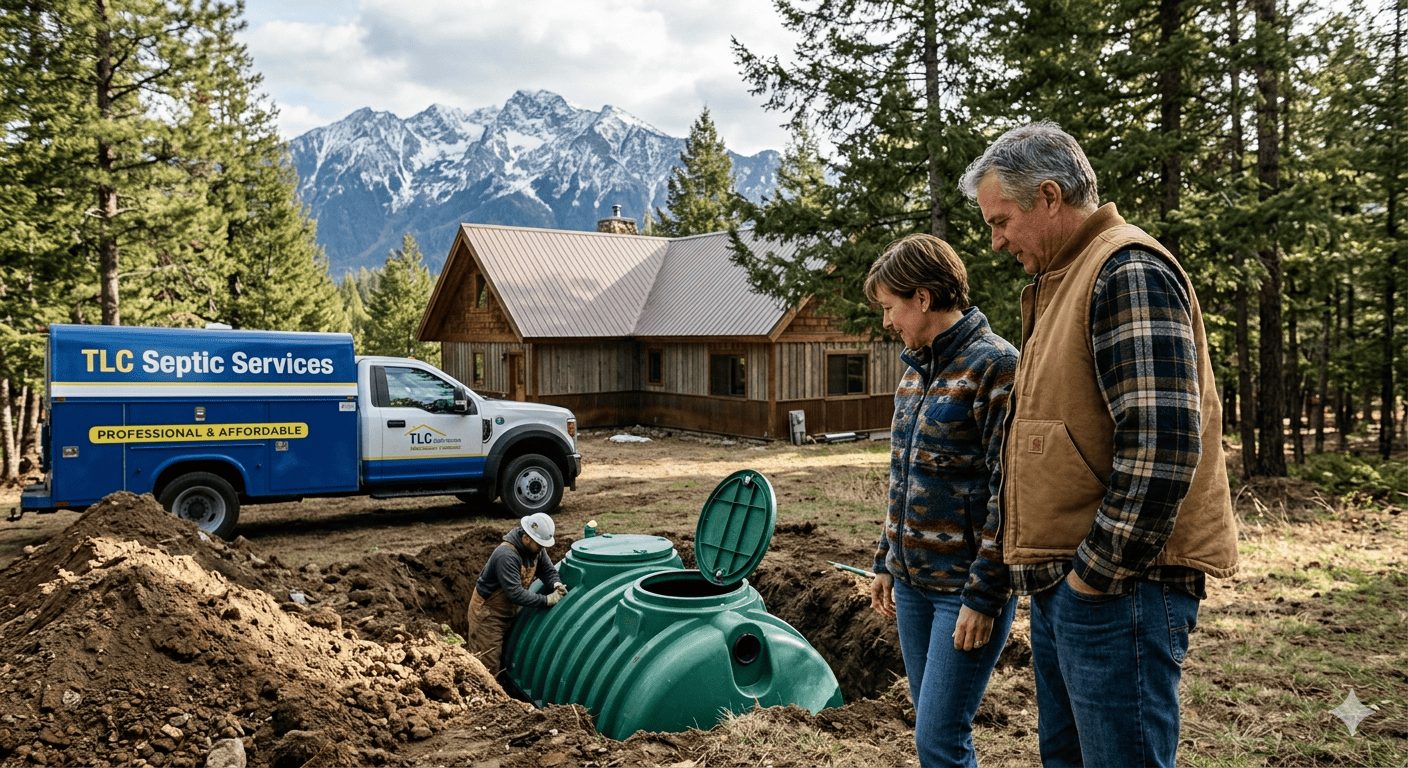
A septic system that works today can fail tomorrow, and when it fails, you are looking at $8,000 to $25,000 for a conventional replacement or upward of $40,000 for an engineered alternative system. The timeline from permit application to completed installation can stretch 2 to 3 months with permitting, engineering, and weather delays.
Out-of-state buyers often skip the septic inspection because their home state did not require one, or because the seller says “it works fine.” Sellers are not lying when they say that. They are telling you what they know. What they may not know is that the drain field is 30 years old and saturated, or that the tank has not been pumped in a decade, or that the system was never permitted in the first place.
How to prevent it: Order a septic inspection before closing ($300 to $500). The inspector will locate the tank, check the baffles, assess the drain field, and verify the system is permitted. If the system is unpermitted or shows signs of failure, you have leverage to negotiate repairs or price reduction before you own the problem. Montana’s DNRC also offers grants up to $5,000 to $7,500 for qualifying septic upgrades, but you need to know the system’s condition before you can apply.
3. Ignoring Access Easement Details
Best for: Any buyer purchasing property on a private road, shared road, or any parcel that does not have direct frontage on a public road.
In Montana, many rural properties are accessed via easements across neighboring land. The easement may be recorded, prescriptive, or assumed. The details of that easement (who maintains the road, who pays for snow removal, what vehicles can use it, whether it is seasonal or year-round) matter enormously and are often not specified in the listing.
Montana law recognizes easements by necessity for landlocked parcels, but establishing one requires legal action and can cost $5,000 to $50,000+ in attorney fees and court proceedings if the neighboring landowner disputes the access.
What this costs when it goes wrong: A buyer purchases a beautiful 20-acre parcel accessed by a road that crosses a neighbor’s property. The listing said “deeded access.” The deed shows an easement, but the language limits use to “agricultural purposes” and does not include residential access. The neighbor objects to year-round residential traffic. The buyer faces either a legal battle to modify the easement or a property they cannot legally live on full-time.
How to prevent it: Have your title company pull the actual easement document (not just confirm that one exists). Have an attorney review the language for permitted uses, maintenance obligations, and seasonal limitations. If the property is accessed via a shared private road, ask to see the road maintenance agreement and confirm what your annual obligation is. Budget $300 to $800 for the attorney review.
4. Not Getting a Wildfire Insurance Quote Before Making an Offer
Best for: Any buyer looking at property in timbered areas, on hillsides, or outside of municipal fire protection districts.
Montana homeowners insurance rose 18% in 2025, and nearly 29% of Montana properties have high wildfire risk, the highest percentage of any state. Some insurance companies are declining to write new policies for properties in the wildland-urban interface (WUI).
This is not a future problem. It is a current one. Buyers who fall in love with a timbered hillside property in Paradise Valley and then discover at closing that insurance will cost $6,000 to $8,000 per year (or worse, that they cannot obtain coverage at all) face either a dramatically higher carrying cost or a deal that falls apart.
How to prevent it: Request a homeowners insurance quote from at least two carriers before you submit an offer on any property outside of a town’s fire protection district. Provide the specific address, acreage, construction details, and proximity to the nearest fire station. If the quotes come back above your budget, you have saved yourself a contingency waiver and a painful discovery at closing.
5. Trusting Online Price Estimates in a Non-Disclosure State
Best for: Every out-of-state buyer who starts their Montana property search on Zillow, Redfin, or Realtor.com.
Montana is a non-disclosure state, meaning actual sale prices are not part of the public record. The algorithms that power Zestimates and similar tools rely on public sale data to generate their estimates. Without that data, the estimates are working with incomplete information.
What this costs when it goes wrong: A buyer uses Zillow’s estimate to decide what to offer and overpays by $30,000 to $80,000 because the algorithm overvalued the neighborhood based on listing prices rather than actual sales. Or, conversely, a buyer submits a lowball offer based on a Zestimate that undervalued the property and loses the home to a better-informed competitor.
How to prevent it: Work with a local broker who has MLS access and can pull actual comparable sales data. In Montana, this data is available to licensed brokers but not to the public. A good broker will provide a comparative market analysis (CMA) showing what similar properties actually sold for, not what algorithms guess they sold for.
6. Skipping the Well Water Test
Best for: Any buyer purchasing property with a private well, which includes most rural properties in Park County.
A well flow test and water quality test cost $300 to $800 combined and take a few days. Skipping them can cost $5,000 to $30,000 if the well needs replacement, deepening, or treatment equipment.
Montana measures an average radon level of 7.4 pCi/L, well above the EPA’s recommended action level of 4.0 pCi/L. In Gallatin County alone, 37% of tested homes have high radon levels. Radon enters homes through well water as well as through foundations, making well water testing especially important in this region. Beyond radon, private wells can contain bacteria, arsenic, nitrates, and heavy metals that are not visible or detectable by taste.
How to prevent it: Order both a well flow test (measures gallons per minute and recovery rate) and a water quality test (bacteria, nitrates, arsenic, radon, and other contaminants) during your inspection period. If the flow rate is below 5 gallons per minute, the well may struggle to serve a household during peak use. If contaminants are present, treatment systems ($2,000 to $8,000 installed) or a new well may be needed. The Montana DEQ offers discounted radon test kits during January each year.
7. Buying on Summer Emotions
Best for: Every buyer who tours Montana properties between June and September and feels the pull to make an offer before the feeling fades.
Montana summers are intoxicating. Fifteen hours of daylight, 85-degree days followed by 55-degree nights, wildflowers in every meadow, and the Yellowstone River running clear. It is the most persuasive sales pitch any landscape can make, and it is genuinely misleading about what the other eight months feel like.
Livingston gets 8 hours and 40 minutes of daylight on the winter solstice. The wind averages 15.2 miles per hour year-round with 30+ mph gusts 67% of the year. Propane heating can cost $2,500 to $4,000 per winter. The gap between summer Montana and winter Montana is wider than almost any other place in the lower 48 states.
How to prevent it: Visit in January or February before you buy. If that is not possible, at minimum, talk to three people who have lived through at least two Montana winters at the specific location you are considering. The property you love in July needs to be the property you can live with in February.
8. Overlooking Covenants and Deed Restrictions
Best for: Any buyer purchasing in a subdivision, planned development, or any property with a homeowners association.
Many buyers assume that purchasing rural Montana property means freedom to use the land however they want. In reality, properties in Montana, regardless of size, may be subject to Covenants, Conditions, and Restrictions (CCRs) that limit everything from exterior paint colors to livestock, outbuildings, short-term rentals, and commercial use.
These restrictions are enforceable. Dues are mandatory, and liens can be placed on property for non-payment. Montana did pass SB 300 in 2019 limiting HOA power, but existing CCRs remain binding.
What this costs when it goes wrong: A buyer purchases a 5-acre parcel planning to build a shop and keep horses. After closing, they discover the CCRs prohibit outbuildings over 600 square feet and limit the property to two domestic animals. The restrictions run with the land and cannot be waived without a vote of the HOA membership. The buyer now owns a property that does not support the lifestyle they moved to Montana for.
How to prevent it: Request and read the full CCRs, bylaws, and any HOA rules before making an offer. If the property has no HOA, ask the title company to confirm that no restrictive covenants are recorded against the property. This takes 30 minutes of reading and can save years of frustration.
9. Not Checking the Floodplain Status
Best for: Any buyer purchasing property near the Yellowstone River, its tributaries, or any waterway in Park County.
The June 2022 Yellowstone River flood was a generational event that reshaped floodplain maps across Park County. FEMA and the Montana DNRC are actively producing updated floodplain maps that incorporate post-flood data. Properties that were not in a designated flood zone before 2022 may be in one now.
If your property is in a FEMA-designated Special Flood Hazard Area, you will be required to carry flood insurance if you have a federally backed mortgage. National Flood Insurance Program premiums can range from $1,500 to $5,000+ per year depending on the property’s flood risk rating. Additionally, building permits in the floodplain face additional requirements and restrictions.
How to prevent it: Check the FEMA flood map for the specific property address and contact the Park County Planning Department to confirm whether the property is in or near a mapped floodplain. Ask specifically whether the maps have been updated since the 2022 flood event. If the property is near any waterway, this check is non-negotiable.
10. Misunderstanding How Commissions Work After the NAR Settlement
Best for: Any buyer who has not purchased a home since August 2024, when the NAR settlement practice changes took effect.
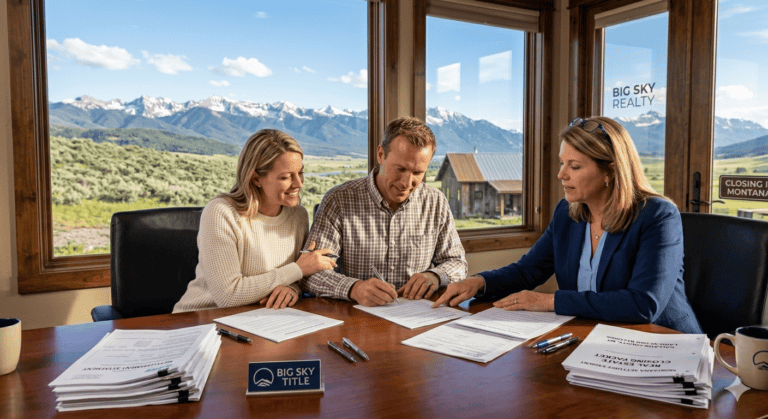
The National Association of Realtors settlement changed how buyer agent compensation is handled. Buyers working with a broker now generally need a written buyer-broker agreement before touring homes, and that agreement spells out the buyer agent’s compensation explicitly.
The old assumption that “the seller always pays the buyer’s agent” is no longer reliable. Compensation is now negotiated deal by deal. In some transactions, the seller offers buyer agent compensation. In others, the buyer pays their agent directly. In many, it is a combination.
What this costs when it goes wrong: A buyer tours multiple homes without a written agreement, finds the perfect property, and then discovers at the offer stage that the seller is not offering buyer agent compensation. The buyer now faces either paying their agent’s commission out of pocket (typically 2.5% to 3% of the purchase price, or $12,500 to $15,000 on a $500,000 home) or proceeding without representation.
How to prevent it: Sign a buyer-broker agreement with your agent before you begin touring properties. The agreement should clearly state the agent’s compensation, how it will be paid (by the seller, the buyer, or a combination), and what happens if the seller does not offer buyer agent compensation. This conversation is now a standard part of the process, and any good agent will walk you through it transparently.
The Bottom Line
None of these mistakes require expert-level Montana knowledge to prevent. They require asking the right questions at the right time and not assuming that the process works the same way it does in your home state. Montana real estate has its own rules, its own risks, and its own reward structure. The buyers who do well here are the ones who treat the due diligence process as seriously as they treat the property search.
Frequently Asked Questions
What is the single most expensive mistake out-of-state buyers make in Montana?
Water rights issues. A property with unclear, abandoned, or improperly transferred water rights can lose $50,000 to $100,000 or more in value, and the problem may not be discoverable without a specific investigation of DNRC records. Budget $500 to $1,500 for a water rights review before closing on any rural property.
How much does a pre-purchase septic inspection cost in Montana?
A septic inspection typically costs $300 to $500 and includes locating the tank, checking baffles and the drain field, and verifying the system is permitted. Given that replacement costs run $8,000 to $40,000+, the inspection is one of the highest-return investments in the transaction.
Is radon a real concern in Montana?
Yes. Montana’s average indoor radon level of 7.4 pCi/L is nearly double the EPA’s recommended action level of 4.0 pCi/L. In Gallatin County, 37% of tested homes have elevated radon. Radon testing costs $150 to $300 and should be part of every home inspection, including new construction.
Do I need a buyer-broker agreement in Montana?
Since the NAR settlement practice changes took effect in August 2024, buyers working with an MLS participant generally need a written agreement before touring homes. The agreement specifies compensation terms and protects both the buyer and the agent.
How do I check if a Montana property is in a floodplain?
Use the FEMA Flood Map Service Center to search by address, and contact the Park County Planning Department to confirm current floodplain status. Maps are being updated following the 2022 Yellowstone River flood, so older information may be outdated.
About the Author
Stacy Bennin is a licensed real estate broker in Montana, affiliated with Legacy Lands Real Estate in Paradise Valley. She helps buyers and sellers across Park County and southwest Montana find property that fits their needs, and stays current on AI and emerging technology so her clients benefit from where real estate is headed, not just where it has been. Reach her at stacyadell.com or (406) 224-3267.