Why Water Rights Matter More Than You Think
What every Montana land buyer and Seller should understand
If you’re buying land in Montana, you’ve probably heard the phrase “water runs with the land.” It sounds simple enough. Buy the property, get the water. Done.
I heard this at a showing today and the lady looked at me with a puzzled expression when I said “not always.” Water rights in Montana are more nuanced than most people realize, and misunderstanding them can cost you — financially, legally, and in ways you might not expect. Like fire.
Water rights don’t always transfer automatically
Here’s the general rule: when a property sells in Montana, any water rights attached to that land transfer with it by default. If the seller doesn’t specifically mention water rights in the conveyance, they go with the property.
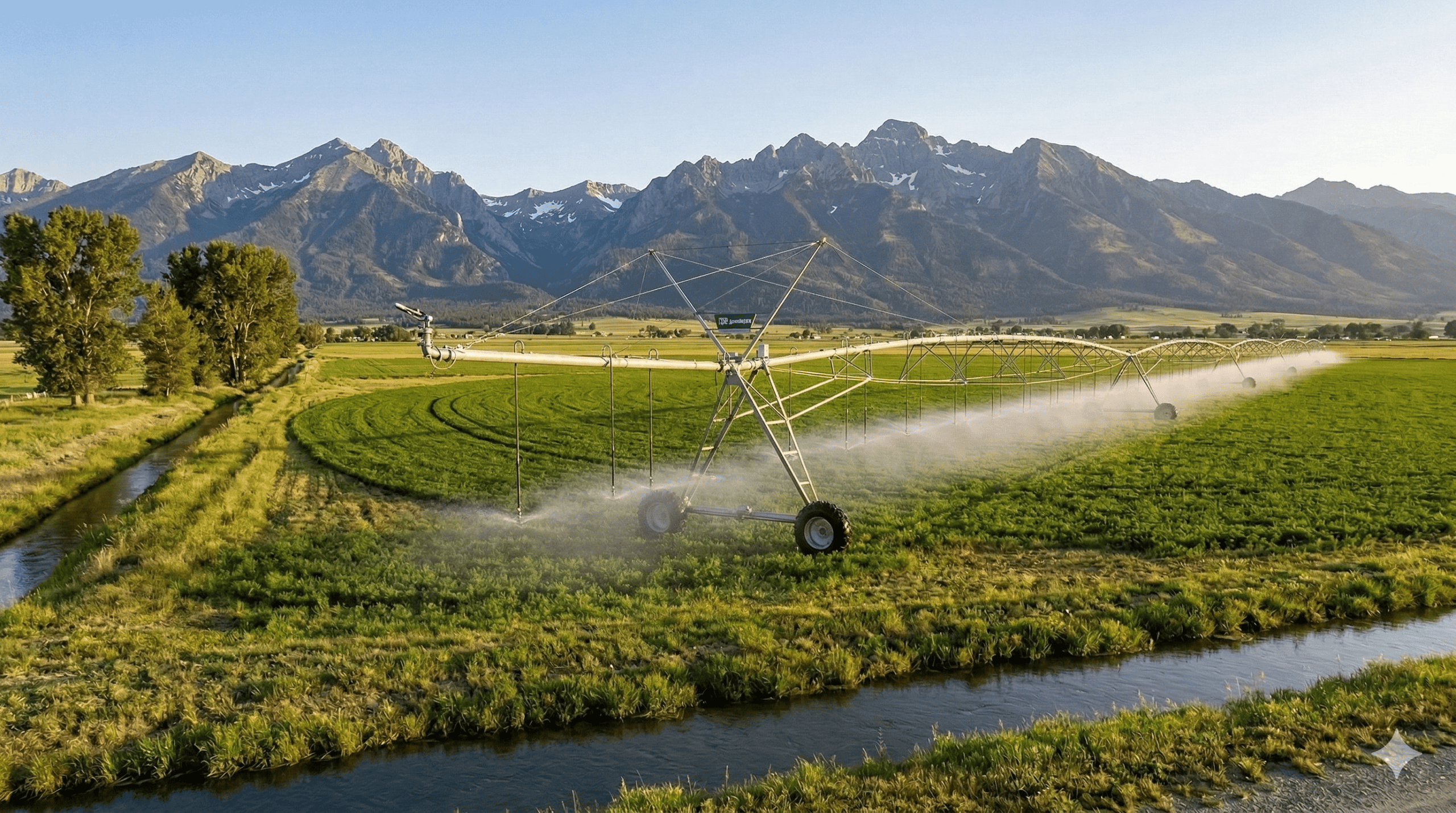
But sellers have the option to reserve water rights during a sale. That means someone could buy a beautiful piece of land with irrigation infrastructure already in place such as ditches, headgates, pivots… but discover after closing that the seller kept the irrigation rights. Without that water right, the infrastructure is just decoration.
This happens more often than people think, and it’s completely legal. Water rights in Montana can be severed from the land, reserved during a transfer, or sold separately. The Montana Department of Natural Resources and Conservation (DNRC) tracks these changes, and any split or reservation requires proper filing.
The takeaway? Never assume. A water right listed on a property doesn’t guarantee you’ll own it after closing unless the purchase agreement addresses it directly.
The “first in time, first in right” system
Montana operates under the prior appropriation doctrine, which essentially means the oldest water rights get priority. When water is scarce, senior rights holders can “call” on junior rights holders to stop using water until the senior rights are satisfied.
Priority dates matter enormously. A water right from 1905 carries far more security than one from 1995, especially during drought years. When evaluating a property, knowing the priority date of any associated water rights is just as important as knowing the flow rate or volume.
And here’s where it gets tricky. A water right is only as valid as the use behind it. Montana water rights are tied to beneficial use. If a right hasn’t been exercised, its validity can be challenged. A Statement of Claim on paper doesn’t always reflect what’s actually happening on the ground.
The connection between irrigation and fire prevention
This is the part most people don’t think about.
In rural Montana communities, especially in valleys like Paradise Valley, irrigation does more than grow hay or keep pastures green. Irrigated land acts as a natural firebreak. When property owners water their fields and pastures throughout the summer, that moisture creates a buffer zone that can slow or stop a wildfire from sweeping through a neighborhood.
When people stop irrigating, whether because they don’t understand their water rights, don’t want the hassle, or simply neglect the land, those pastures dry out. And dry grass in a Montana summer is fuel. One lightning strike, one spark, and fire moves fast across ground that should have been green.
This isn’t hypothetical. Last year in Paradise Valley, fire swept through areas where landowners had neglected to irrigate. Before it happened, the issue had been raised at a homeowners association meeting. One neighbor pointed out that people needed to start watering their property for the safety of the entire neighborhood. The warning went unheard until the proof was burning through the valley.
Water rights, it turns out, aren’t just about agriculture or property value. They can also be about community safety.
What buyers should do before closing
A few steps can save a lot of pain down the road:
Check the DNRC records. Every water right in Montana is tracked through the DNRC’s Water Right Query System. Search by geocode, legal land description, or owner name to see what’s actually attached to the property you’re considering. Your geocode can be found on property tax records or through Montana Cadastral.
Read the purchase agreement carefully. Make sure water rights are explicitly addressed. Are they included? Reserved by the seller? Severed? If the agreement is silent on water rights, they transfer by default — but “default” isn’t the same as “guaranteed” if there’s a dispute later.
Look at the land, not just the paperwork. A Statement of Claim might list acreage for irrigation that was never actually irrigated. Walking the property and looking for evidence of historical use like ditches, headgates, green pastures. These can tell a story that documents sometimes don’t.
Ask about the priority date. Older is better. A senior water right is far more reliable during dry years than a junior one.
Talk to the neighbors. In Montana’s water system, your use affects the people upstream and downstream of you. Understanding the local water dynamics before you buy can prevent conflicts later.
Water rights are more than a line item
For anyone buying or owning land in Montana, water rights deserve serious attention rather than an afterthought at closing, but as a fundamental part of understanding what you’re actually getting. This is particularly important for out-of-state buyer who have never heard the phrase ” whiskey is for drinking and water is for fighting.” The legal framework, the priority system, the practical impact on fire safety and land stewardship all connects.
The old saying that water runs with the land is a good starting point. Just don’t let it be the only thing you know.
Frequently Asked Questions About Water Rights in Montana
Do water rights automatically transfer when you buy land in Montana? In most cases yes — water rights attached to a property transfer with the land by default. However sellers have the legal option to reserve water rights during a sale, which means you could purchase land with irrigation infrastructure in place and discover the water rights stayed with the seller. Always confirm water rights are explicitly included in the purchase agreement before closing.
What is the prior appropriation doctrine in Montana? Montana uses the prior appropriation system, which means water rights are ranked by their priority date — the older the right, the higher the priority. During drought conditions, senior rights holders can require junior rights holders to stop using water until their allocation is satisfied. When evaluating a property, knowing the priority date of any associated water rights is just as important as knowing the volume or flow rate.
How do I check water rights on a Montana property? Use the Montana DNRC Water Right Query System, which is available online. You can search by geocode, legal land description, or owner name. Your geocode can be found on property tax records or through Montana Cadastral. This search will show you what rights are claimed on the property and who currently holds them.
Can water rights be sold separately from land in Montana? Yes. Montana law allows water rights to be severed from the land and sold independently. This means a parcel of land may appear to have water rights associated with it historically but those rights may have already been transferred to someone else. Always verify current ownership of water rights through the DNRC before purchasing.
Why does irrigation matter for fire safety in rural Montana? Irrigated land stays green through the summer and acts as a natural firebreak. When landowners stop irrigating — whether due to lack of water rights, neglect, or lack of understanding — pastures dry out and become fuel. In valleys like Paradise Valley, neighbors’ irrigation habits directly affect fire risk for the entire community.
Stacy Bennin is a real estate broker with Legacy Lands Real Estate, based in Paradise Valley, Montana. For questions about water rights, land transactions, or buying and selling property in southwestern Montana, reach out at stacy@legacylandsllc.com or 406-224-3267.