Buying Land in Montana: What You Need to Know Before You Purchase
Buying land in Montana is one of the most consequential real estate decisions a person can make, and it is also one of the most commonly misunderstood. The appeal is obvious. Space, privacy, access to rivers and public land, and the kind of long-term value that comes from genuine scarcity. What is less obvious to most buyers, particularly those coming from other states, is how many variables determine whether a piece of Montana land is actually worth owning.
This is not a market where you can rely on aesthetics and price per acre to make a sound decision. The land itself has to be evaluated on its own terms, and that requires understanding what makes Montana land functional, valuable, and worth holding over time.
Key Takeaways: Water rights, legal access, and terrain usability matter more than views or price per acre. Infrastructure costs on raw land can be substantial and should be evaluated before purchase. Not all Montana land is buildable, and not all listed properties include the water rights necessary for residential or agricultural use.
Why Are People Buying Land in Montana Right Now?
Fleeing Citys
The buyers coming into Montana land markets right now are not all the same. Some are fleeing density and regulation in states like California, Colorado, and Washington. Some are remote workers who no longer have a reason to live near a city. Some are investors who recognize that usable, well-watered Montana land is not being created and that population pressure on inventory is only going one direction.
Space and Independence
What they share is a preference for space, independence, and something durable. Montana land, when purchased correctly, offers all of that. When purchased incorrectly, it can sit unusable for years while the owner figures out that the access road is seasonal, the water rights are junior, and the build site is in a flood zone.
The difference between those two outcomes almost always comes down to how carefully the land was evaluated before purchase.
What Are the Most Important Factors When Buying Land in Montana?
Water Rights
The first thing to understand about Montana land is that water and land ownership are legally separate. Montana operates under the prior appropriation doctrine, which means water rights are allocated by priority date. A senior water right, one with an older priority date, takes precedence over junior rights in times of shortage. Buying a property without confirmed, transferable water rights, or without understanding the priority of the rights attached to it, is one of the most consequential mistakes a Montana land buyer can make. Properties without reliable water access are not only harder to use, they are harder to sell.
Legal Access
Access is the second factor that buyers underestimate. Legal access means the property has a recorded, deeded right to reach the parcel from a public road. Physical access means the road is actually passable year-round under the conditions the buyer expects to use the property. Some Montana parcels are technically accessible but require a high-clearance vehicle in summer and a snowmobile in winter. Others rely on access agreements with neighboring landowners that are informal and potentially revocable. Before purchasing any rural Montana parcel, the access situation needs to be confirmed, in writing, through the deed and county records.
Terrain and buildability are not guaranteed. Steep slopes, rocky soil, poor drainage, and flood zone designations can all eliminate a parcel as a viable build site regardless of how it looks from the road or in listing photos. Any parcel being purchased with the intention of building on it should be evaluated for soil composition, grade, drainage, and FEMA flood designation before the offer is written.
Zoning and Covenants
Zoning and covenants add another layer. Park County and the municipalities within it have their own zoning regulations, and many subdivisions carry private covenants that restrict use further. Limitations on building size, setbacks, livestock, short-term rentals, and subdivision are all common. Understanding what you can and cannot do with a parcel before purchase is not a detail, it is a fundamental part of the decision.
Infrastructure
Infrastructure costs are the number that most buyers underestimate most severely. Drilling a well in Montana can cost anywhere from $8,000 to $30,000 or more depending on depth and geology. A permitted septic system runs $10,000 to $25,000 depending on site conditions. Electrical service to a remote parcel can add tens of thousands more depending on distance to the nearest line. A basic gravel road to a build site can run several thousand dollars per mile. These are not unusual costs on raw land in Park County, and they need to be part of the purchase math from the beginning.
What Types of Land Are Available in Montana?
Recreational
Recreational land is typically purchased for hunting, fishing, and seasonal use. These parcels may have minimal infrastructure and may have limited or seasonal access, which is acceptable for their intended purpose. The evaluation priorities shift accordingly, with attention to wildlife habitat, water features, and adjacency to public land.
Residential
Residential land is purchased with the intention of building a home, either as a primary residence or a part-time retreat. These parcels require the most careful evaluation because the gap between a listing price and a fully developed, livable property can be very large depending on what infrastructure is absent.
Agricultural
Agricultural and ranch land is evaluated for carrying capacity, water availability, hay production, and grazing rights. These larger parcels have their own set of considerations around water shares, grazing leases, and the condition of existing improvements such as fencing, outbuildings, and irrigation systems.
Each type demands a different approach, and a parcel that would make an excellent hunting retreat might be a poor choice as a residential build site, and vice versa.
What Mistakes Do Land Buyers Most Often Make in Montana?
The most common mistake is assuming that any listed parcel is buildable. Montana has a significant amount of land that is scenic, affordable, and effectively unusable for residential purposes due to access, water, or terrain constraints. Some of it is listed without those limitations being prominently disclosed.
Water Rights
Overlooking the water rights situation is the mistake with the most long-term consequence. A parcel that looks like a strong buy at the listed price may be a poor value once you understand that the water rights attached to it are junior, limited, or not included in the sale at all.
Infrastructure
Underestimating infrastructure costs is the mistake most buyers catch too late. The per-acre price on a raw parcel does not tell you what it costs to make that parcel functional. Buyers who do not request site assessments and cost estimates before going under contract often discover significant budget surprises after closing.
Image over Substance
Focusing on views rather than usability is understandable but expensive. A property with a spectacular view and no usable flat ground, no water, and no legal access is worth considerably less than a modest property with strong water rights, year-round road access, and a buildable site.
Not working with a local broker who understands land is a mistake that compounds all the others. Land transactions require a different level of due diligence than residential purchases, and the information needed to evaluate a rural Montana parcel correctly is not visible in an MLS listing.
How Do You Evaluate Montana Land Before Making an Offer?
Start with the objective. A parcel being purchased for recreational use is evaluated differently than one being purchased to build a home, run livestock, or hold as a long-term investment. Getting clear on the intended use first lets you prioritize the right evaluation criteria.
Evaluate water before anything else. Review the water rights attached to the property, understand their type and priority date, and confirm that they transfer with the sale. If the parcel does not have confirmed water rights, understand what sourcing water would require and what it would cost.
Confirm access through the deed and county records, not just by driving to the property. Make sure the access is legal, year-round, and does not depend on informal arrangements with neighboring landowners.
Review the terrain with a build site in mind if residential use is part of the plan. Walk the property, understand where usable flat ground exists, identify drainage patterns, and check FEMA flood maps for the parcel.
Research zoning and any subdivision covenants before the offer is written. County planning departments can provide zoning information, and title searches will surface recorded covenants.
Estimate total development costs before finalizing the offer price. The price paid for the land is only part of the investment. Understanding what it costs to make the land functional gives a complete picture of the total commitment.
Where Are the Best Areas to Buy Land in Montana?
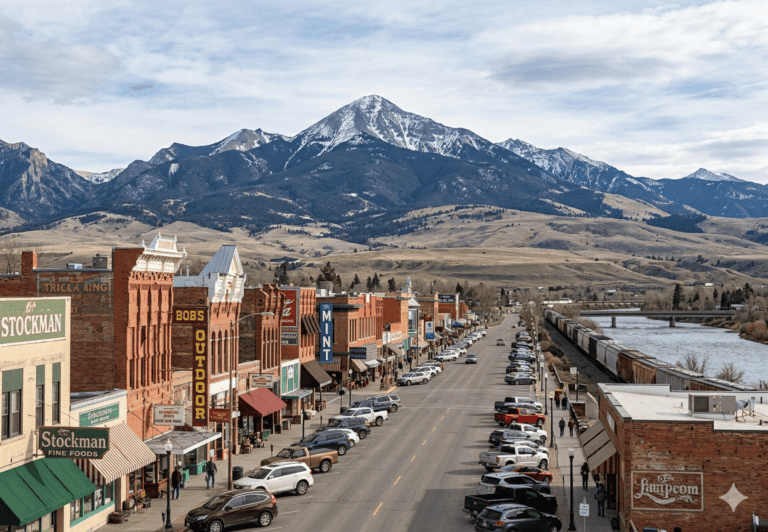
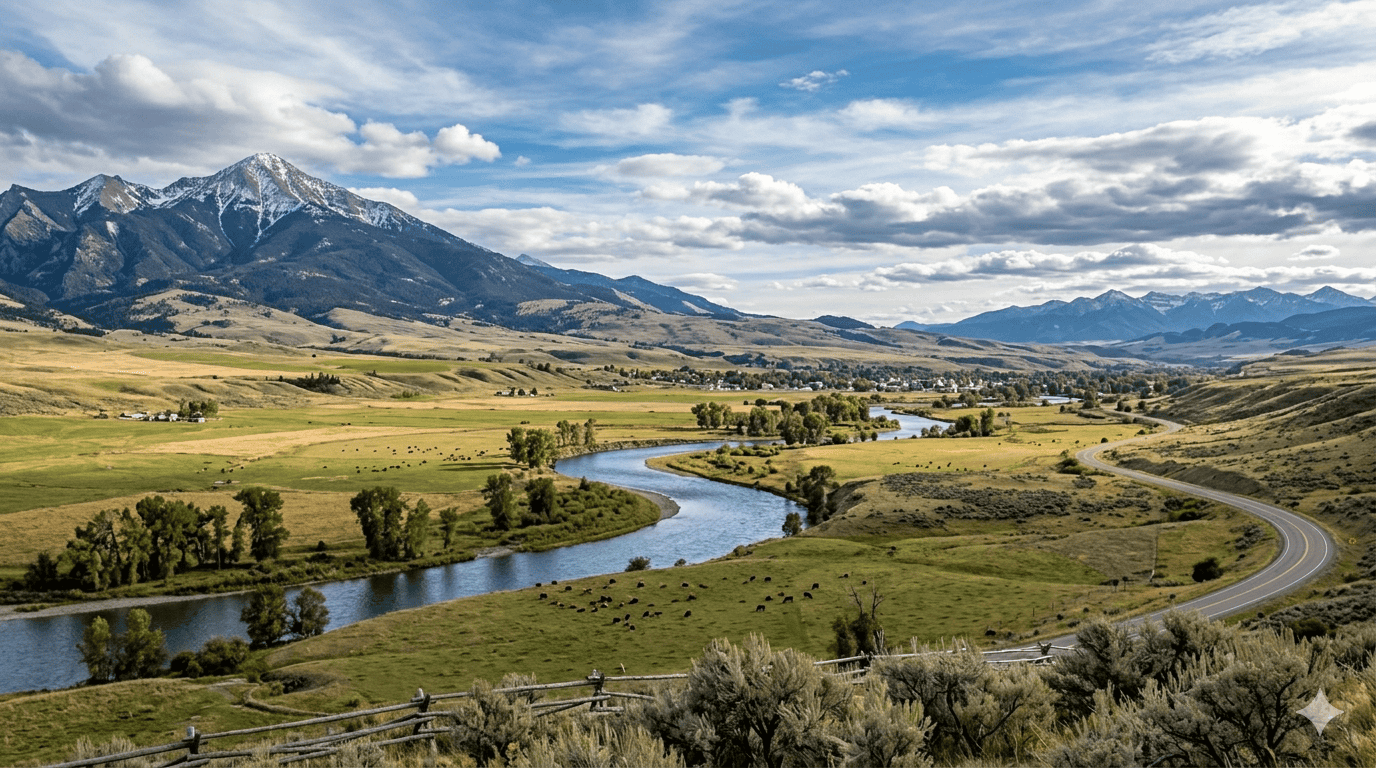
The Livingston and Paradise Valley corridor in Park County is one of the most desirable areas in the state for buyers seeking land with strong long-term value. The combination of Yellowstone River access, proximity to Yellowstone National Park, mountain terrain, and a functioning local community in Livingston creates conditions that support durable land values. Inventory in this corridor is genuinely limited, and properties with strong water rights and year-round access attract serious attention when they come to market.
The Bozeman area in Gallatin County has seen significant price appreciation and reduced affordability for raw land over the past decade. Buyers seeking land with more runway tend to look toward Park County, Carbon County, and the broader Yellowstone River corridor.
Each area has its own pricing dynamics, zoning environment, and land characteristics. Local knowledge matters when comparing parcels across different areas because the variables that drive value are not uniform across the state.
Frequently Asked Questions About Buying Land in Montana
How much does land cost in Montana? Price varies significantly by county, parcel size, water access, and improvements. Raw recreational parcels in rural counties can list in the low tens of thousands per acre, while river-front land in Paradise Valley or land adjacent to Yellowstone National Park can reach substantially higher figures. Park County land with strong water rights and year-round access commands a premium that reflects genuine scarcity.
Can I build a home on any Montana land parcel? No. Buildability depends on terrain, soil, zoning, and access. Some parcels that are legally zoned for residential use are not practically buildable due to physical site conditions. A site assessment should be part of the due diligence process on any parcel being purchased with the intention of building.
Do water rights automatically come with land in Montana? Not always. Montana water rights are allocated separately from surface ownership and must be confirmed through the deed and DNRC records. Some parcels are sold without water rights included, and the buyer assumes responsibility for sourcing water independently, which can be expensive and uncertain.
What is the process for buying land in Montana? The process involves identifying target parcels, conducting land-specific due diligence including water rights review, access confirmation, terrain assessment, and infrastructure cost estimation, making an offer, completing title work, and closing. Unlike residential purchases, land transactions require more investigation before the offer stage because many of the relevant factors are not disclosed in standard listing information.
How long does it take to find the right land in Montana? It depends on how specific your criteria are and how quickly you can move when the right property appears. Buyers with clear objectives and pre-established financing are in a much better position to act decisively. Properties with strong characteristics in the Park County and Paradise Valley area do not sit on the market for long when they are priced accurately.
Ready to Start Looking at Land in Montana?
Whether the goal is a residential build site, a recreational retreat, a working ranch, or a long-term land investment, the right purchase starts with clarity about what the land needs to do and a disciplined evaluation of what it actually offers.
My focus is on helping buyers understand what they are purchasing before they commit, not simply helping a transaction close. That means being direct about problems, honest about costs, and clear about what separates a strong buy from a weak one in this market.
Contact me to start a conversation about available land in the Livingston, Paradise Valley, and Park County area.
Stacy Bennin, Licensed Montana Real Estate Broker Livingston and Paradise Valley, Montana
[406-224-3267]
[stacy@legacylandsllc.com] stacyadell.com