Montana’s Quiet Revolution – How Blockchain Will Change Everything You Know About Property Ownership

In the wide-open spaces of Montana, change rarely arrives with noise or spectacle. It takes root quietly steadily reshaping the landscape before the rest of the world realizes what has happened. Today, that quiet transformation is unfolding not in ranching or tourism, but in the way we define and protect property rights, whether that is information, intellectual property, stocks, personal property or real estate.
While most conversations about blockchain revolve around speculative assets or volatile cryptocurrencies, Montana has been taking a more grounded approach. Over the past few years, the state has built one of the most forward-thinking legal frameworks for digital innovation in the United States, positioning itself alongside Wyoming, which is at the forefront of a movement that could redefine property rights and how we hold assets.

Blockchain is a shared digital ledger that records information in a way that is transparent, tamper-resistant, and not controlled by a single company or authority. Instead of data being stored in one central database, copies of the ledger are distributed across many independent computers. Once information is recorded, it cannot be quietly changed or erased, it can only be appended. This makes blockchain useful for tracking transactions, ownership, and records where verification and permanence matter. People access the blockchain through digital wallets and applications. A digital wallet holds cryptographic keys that allow a person to approve actions and prove control over assets or records. Most interactions happen through decentralized applications (dApps), which function like websites but connect directly to the blockchain rather than a company’s private database. The wallet acts as the user’s identity and permission layer, allowing them to interact with the system without traditional accounts or intermediaries.
Montana’s Legislative Groundwork
Three key pieces of recent legislation have laid the foundation for this shift:Senate Bill 212 , the Right to Compute Act, Senate Bill 265, the Financial Freedom and Innovation Act, and Senate Bill 330, which explores the legal recognition of blockchain technology for commerce and record-keeping.
Together, these bills signal something remarkable. Montana has chosen to encourage innovation without sacrificing individual autonomy. SB 265 provides a regulatory environment that recognizes blockchain-based assets and smart contracts as legitimate tools for business, while SB 330 establishes Montana’s Blockchain and Digital Innovation Task Force, which is exploring practical applications of blockchain in areas such as property transfer, record integrity, and economic development. SB 212, the Right to Compute Act, legally protects individuals and businesses’ freedom to use computational resources, safeguarding the ability to run blockchain nodes and infrastructure without undue government interference.
In simple terms, Montana’s lawmakers are creating a pathway for blockchain to operate within traditional systems, ensuring that decentralization and privacy remain compatible with commerce and law. This is not the restrictive, surveillance-based version of digital identity that some nations are pursuing. It is a model that respects voluntary participation and self-custody. Values that align perfectly with Montana’s historically independent spirit.
From Utility Tokens to Tokenized Property
As early as 2019, CoinDesk reported that Montana had passed a bill exempting utility tokens from securities laws, making Montana one of the first in the nation to distinguish between speculative digital assets and functional blockchain tokens designed for real-world use.
That early decision invited experimentation and creativity by allowing genuine innovation to flourish without the demoralizing weight of over-regulation.
The Fundamentals of Tokenization
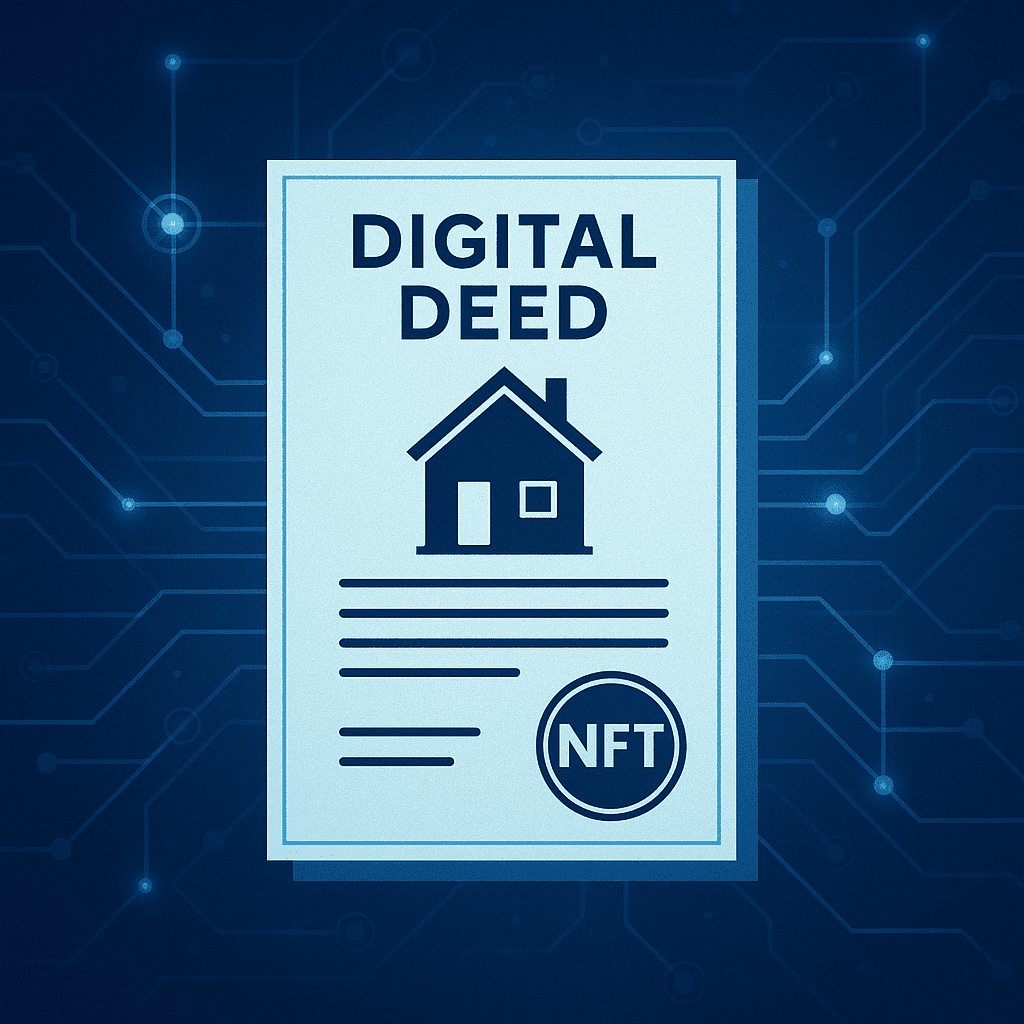
Tokenization is the process of converting a real-world asset into a SPV (Special Purpose Vehicle like an LLC) and then digital token. This can be further “sharded” into fractions that each represent a portion of ownership. These fractionalized shares can live as tokens on a blockchain and point back to the proportionate amount of the physical asset. The fractionalized shares fall under SEC regulations just like a stock in your brokerage account.
Unlike banks and brokerages like Fidelity, Vanguard, etc… Instead of stacks of paperwork, wire transfers, and endless verification cycles, tokenization enables verified transactions through smart contracts which are self-executing agreements encoded on the blockchain. Think of them as the traffic cop of the blockchain. Each smart contract has its own specific instructions and executes them exactly as written, essentially automating the processes that currently take many steps and people to complete.
Benefits of Tokenization:
- Liquidity: Real estate becomes an accessible, tradable asset class. This is best for apartment/office buildings and convention centers or or hotels with multiple investors. However, imagine you own a home and have a medical emergency you need $80K to cover. Rather than selling your entire home you could sell a few shares of it for an agreed upon period of time… and use your equity to support your life without refinancing and going into further debt.
- Transparency: Every ownership change is recorded permanently on-chain.
- Accessibility: Investors and buyers can participate from anywhere in the world 24/7.
- Security: Records cannot be lost, forged, or altered.
Propy: Real Estate on the Blockchain
One of the most established platforms leading this transition is Propy, a Silicon Valley based company that has successfully conducted blockchain property sales in multiple U.S. jurisdictions.
Propy’s platform allows users to complete every stage of a real estate transaction. From listing and offer to escrow and deed transfer on-chain, meaning on Layer 1 blockchains like Ethereum and Solana, and Layer 2′s like Arbitrum, and more. Smart contracts are in place to ensure that funds and documents move automatically once predefined conditions are met, and the blockchain provides a verifiable record of ownership that cannot be altered or misplaced. Therefore, rather than having many mistake and bias prone individuals executing a transaction, code executes the transaction with minimal human intervention. As strange an impersonal as this sounds, when you truly understand how blockchain works you can clearly see it is a superior, cheaper, faster, more secure and efficient way of operating.
For title companies and brokerages, this model does not remove their role; it could strengthen it. Propy provides a digital infrastructure that makes verification instantaneous and reduces fraud risk. When paired with Montana’s supportive legislation, it becomes easy to envision a future where title transfer, escrow, and even partial ownership of property occur securely on blockchain rails with the assistance of platforms like Propy, without sacrificing local oversight or compliance.

Why This Matters to Montanans
Montana has always valued freedom, privacy, and private property. Those same principles now define the frontier of digital ownership. Digital ledger technology (Blockchain), when implemented under proactive, freedom-focused laws such as SB 265 and SB 330, offers a way to modernize transactions without centralizing control.
Imagine a system where:
- Property records are immune to tampering.
- Closings occur within minutes, not weeks.
- Out-of-state buyers can invest securely without intermediaries holding their data.
- Ownership remains in the hands of individuals, not institutions.
This vision reflects the same ethos that have shaped Montana’s communities. Trust, transparency, and personal responsibility, now expressed through technology.
The Larger Picture: From Paper Titles to Digital Trust
The world is moving toward digital verification in every domain, and property ownership is no exception. Some jurisdictions are experimenting with centralized digital ID systems or programmable currencies that consolidate data and power in the hands of a few.
Montana, by contrast, is demonstrating that modernization can coexist with individual freedom.
By fostering innovation rather than control, the state has created the groundwork for blockchain solutions that empower people rather than surveil them. That when done correctly, empowers the many rather than facilitating the abuse of power among the few.
Among these include Zero-Knowledge-Proofs, a way to verify what is true without exposing personal information as an alternative to digital identity. Your personal data should be yours, and it can be.
As Propy, tokenization platforms, and blockchain registries mature, Montana’s framework could serve as a national model, a way to preserve the human and legal integrity of data and property rights while embracing the efficiency of emerging technology.
Conclusion
Blockchain is not about replacing people. It is about replacing uncertainty.
When applied to real estate, it creates an immutable record of ownership that is faster, safer, and more transparent than anything that has come before.
Montana’s early legislative actions recognized by CoinDesk show that the state has been preparing for this shift longer than most realize.
With SB 265 and SB 330 now in place thanks to MT House Rep Daniel Zolnikov, the infrastructure exists for title companies, brokers, and innovators to begin exploring blockchain-based transactions responsibly.
The real estate revolution will not arrive overnight, nor will it make headlines every day. But, it is growing rapidly across the world and it is coming to Montana. This is not a matter of “if” it is a matter of “when.” This is happening quietly, steadily, and thanks to a few of our forward thinking legislators, it is happening with respect for the principles that have always mattered most in Montana. Freedom, ownership, and trust.
So, what is the first step to preparing for this transition? Learning to use digital wallets. Here is very basic Trezor Wallet Guide with security tips I created to get you started.
If you are a title company interested in facilitating crypto/stablecoin transactions I would love to help. Please contact me at stacybennin@gmail.com or 406-224-3267
Stacy Adell is a Montana real estate broker (licensed as Stacy Bennin) who assists buyers and sellers throughout Paradise Valley, Livingston, Bozeman and Southwestern Montana in general. In addition to her work in conventional real estate sales, she explores how blockchain, self-sovereign digital identity, and new technologies are shaping the future of property ownership and personal privacy. Stacy writes with the goal of making these subjects simple and informative. She can be contacted at stacybennin@gmail.com