The Future of Smart Homes in 2026 – Data, Infrastructure, and Control
The Future of Smart Homes Is Not About Gadgets. It Is About Data, Infrastructure, and Control.
The idea of a “smart home” has quietly evolved. What once referred to a handful of connected gadgets now describes an entire system of networked devices, sensors, and software continuously generating and responding to data. This shift is not about novelty or convenience alone. It represents a deeper change in how homes function, how information flows through them, and how ownership, privacy, and control are defined in a digital world.
This is not the future of flying cars or robot assistants. It is the future of homes as intelligent, data-producing environments.
From Smart Devices to the Internet of Things
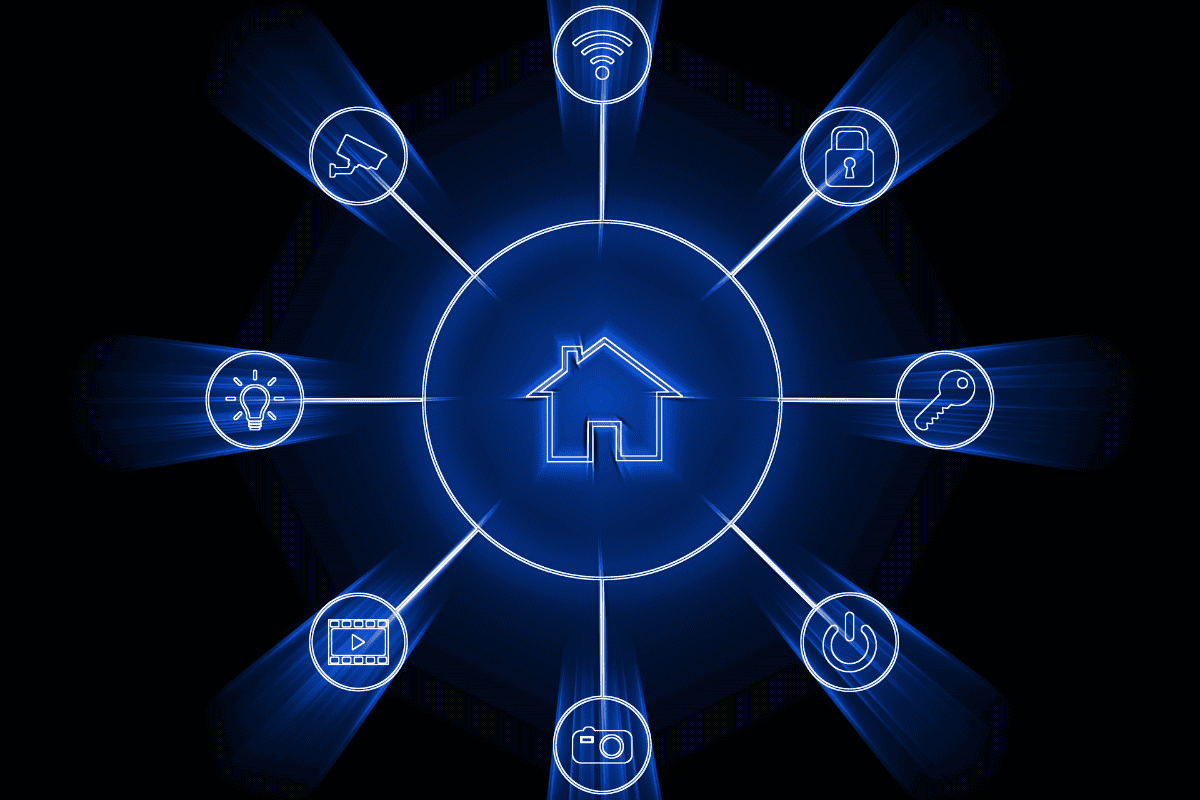
Early smart homes were built around individual features: a programmable thermostat, a voice assistant, or a remotely controlled security camera. Today’s smart homes operate as Internet of Things (IoT) systems, where devices communicate not only with the homeowner, but with each other.
Sensors embedded throughout a home collect data continuously. Temperature, motion, lighting conditions, energy usage, air quality, appliance performance, and occupancy patterns are all measured in real time. This data is processed locally or transmitted to cloud platforms, where software systems analyze it to automate decisions and optimize performance.
In this model, the home itself becomes a living system. Lights respond to natural daylight. Heating and cooling adjust based on occupancy and weather forecasts. Appliances coordinate energy usage to reduce costs. Security systems adapt to behavioral patterns rather than fixed schedules.
The defining feature is no longer the device. It is the data flow between devices.
Smart Homes as Data-Producing Assets
As smart homes evolve, data becomes the most valuable output. Every connected device contributes to a continuous stream of behavioral and environmental information. Over time, this data creates a detailed picture of how a home is used and how the people inside it live.
This has meaningful implications.
Smart-home data can improve efficiency, reduce energy waste, and enhance comfort. It can also influence insurance pricing, maintenance planning, property valuation, and future resale decisions. In some cases, aggregated data from many homes is monetized by platform providers, often without homeowners fully understanding how or where that data is used.
This raises an important question: Who owns the data generated by a home?
Privacy, Security, and the Question of Control
As homes become more connected, privacy and security concerns move from the margins to the center of the conversation. A modern smart home may hold information about daily routines, travel patterns, health indicators, financial activity, and physical security. If that data is compromised or misused, the consequences extend far beyond inconvenience.
Security can no longer rely on basic passwords alone. Modern smart homes increasingly require:
- Device-level authentication
- Encrypted data transmission
- Multi-factor access controls
- Regular firmware updates
- Clear boundaries between local and cloud-based data storage
Just as important as technical security is data governance. Homeowners need transparency around what data is collected, how long it is stored, who can access it, and whether it can be transferred or sold. Without clear standards, convenience can quietly come at the cost of autonomy.
Where Blockchain and Decentralized Systems Enter the Conversation
As smart homes generate more data and rely on more automated decision-making, interest is growing in decentralized technologies that can improve transparency and trust. Blockchain-based systems offer a way to create immutable, time-stamped records of device activity, access permissions, and transactions without relying entirely on centralized platforms.
In future smart-home architectures, blockchain may play a role in:
- Verifying device identity
- Recording access and permission changes
- Securing ownership records tied to digital infrastructure
- Enabling privacy-preserving data sharing
This does not mean homeowners interact directly with blockchains. Instead, digital wallets and applications may act as access layers, allowing individuals to control permissions and verify activity without exposing sensitive personal data.
The goal is not complexity. It is accountability.
Rethinking What “Smart” Really Means
The future of smart homes is not defined by novelty or automation alone. It is defined by how well systems balance intelligence with restraint, efficiency with privacy, and convenience with control.
A truly smart home is not one that collects the most data. It is one that uses data responsibly, transparently, and in alignment with the interests of the people who live there.
As homes increasingly function as digital infrastructure, understanding how these systems work is no longer optional. It is part of modern ownership literacy.
The future of smart homes is already here. The question is not whether homes will become smarter, but whether homeowners will remain informed and empowered as that transformation unfolds.