What Surprises People Most After Their First Year in Montana?

The things that nobody puts in the brochure, including the ones that make you want to stay.
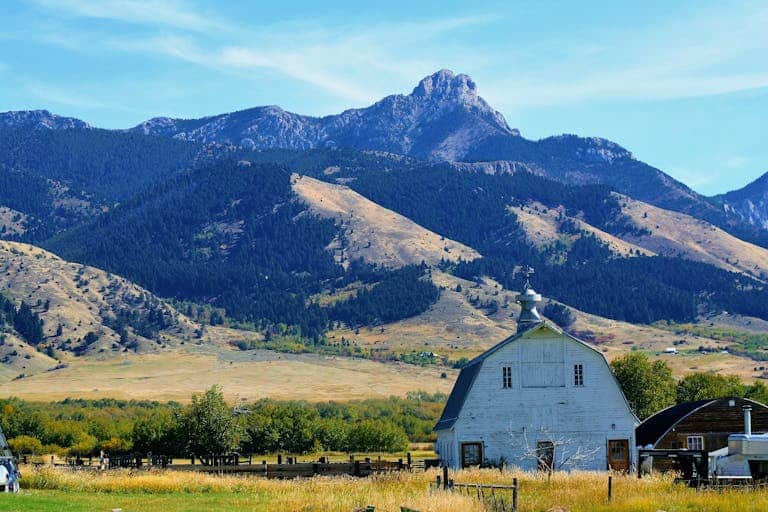
Every person who moves to Montana has a version of the same first year. You spend the summer convinced you made the best decision of your life. You spend October wondering if you are ready for what is coming. You spend January asking yourself hard questions. And then one morning in March, you walk outside and the light hits the mountains in a way that makes you forget every frozen pipe, every 60-mile-per-hour wind gust, and every Tuesday you drove 45 minutes for a dentist appointment.
The first year is not what you expect. It is both harder and better than the version you imagined from your couch in California or Florida or Texas. Having made this move myself from Florida more than a decade ago, and having watched dozens of clients go through it since, here are the surprises that actually matter.
The short answer: The biggest first-year surprises are not about the cold or the cost. They are about the wind (which nobody warns you about), the darkness (which hits harder than the temperature), the distances (which reshape your relationship with convenience), and the community (which is warmer and stranger and more generous than anything you have experienced in a metro area). The people who stay past year one are the ones who made peace with the tradeoffs before they arrived.
How Bad Is the Wind, and Why Did Nobody Mention It?
Everyone talks about Montana winters. Almost nobody talks about Montana wind. And in Livingston specifically, the wind is the weather feature that defines daily life more than snow or cold.
Livingston averages 15.2 miles per hour in annual wind speed, making it the windiest city in the state. That is not a gentle breeze. Gusts of 30 miles per hour or more occur 67% of the year. Some days, the wind blows hard enough to push your car sideways on the highway. It will rip open your car door if you are not holding it. It will destroy anything lightweight left in your yard.
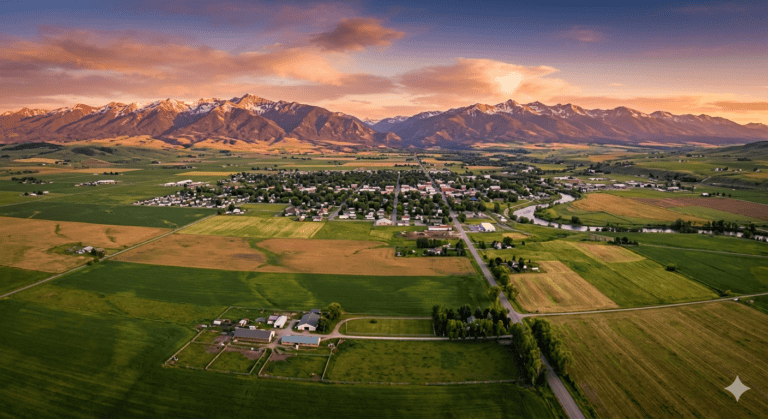
The physics are specific to this geography. Cold air pools over Yellowstone National Park to the south, creating higher pressure. Lower pressure sits over central Montana. The air flows from high to low through the Yellowstone River canyon, and Livingston sits at the mouth of that funnel. That is why a calm day in Bozeman can be a 50-mile-per-hour day in Livingston, 25 miles east.
Practical implications for newcomers: secure your outdoor furniture with stakes or chains, budget for a wind-rated fence if you have dogs or small children, expect your heating bill to be higher than square footage alone would predict (wind strips heat from a house faster than still cold air), and accept that some days you simply do not go outside for a walk. The locals do not complain about the wind. They just lean into it and keep walking.
Does the Darkness in Winter Affect People More Than the Cold?
This is the surprise that catches the most transplants off guard, especially those from southern states. Montana’s latitude means the swing between winter and summer daylight is dramatic, and nothing in Florida or Texas prepares you for it.
On the winter solstice, Livingston gets 8 hours and 40 minutes of daylight. The sun sets at 4:39 PM in early December. By the time you finish work, it has been dark for an hour. The effect is cumulative. After two months of short days, gray skies, and cold that discourages going outside, even people who “love winter” start feeling the weight of it.
The flip side is the surprise that makes it worth it. On the summer solstice, Livingston gets 15 hours and 42 minutes of daylight. The sun does not set until 9:17 PM. You can fish, garden, ride horses, or sit on your porch in full light until after nine at night. That first Montana summer evening, when the alpenglow hits the Absarokas at 9:30 PM, you understand why people put up with January.
What helps: A full-spectrum light for your desk or kitchen counter during November through February. Staying physically active even when it is cold and dark. Making plans that get you out of the house two to three evenings per week. The first-year transplants who struggle most are the ones who hunker down and wait for spring. Do not wait. Build a winter routine that includes other people.
What Is It Like Living With Wildlife on Your Property?
If you bought property outside of town, you will have wildlife visitors. Not occasionally. Regularly.
Deer will eat your garden. Moose will stand in your driveway and refuse to move. Bears will investigate your garbage if you leave it unsecured. Mountain lions are present throughout Park County and are increasingly found near residential areas. Montana Fish, Wildlife and Parks logged 61 grizzly bear conflicts with 72 bears in 2025, and grizzly range continues to expand into areas where they were not common a decade ago.
This is not a reason to be afraid. It is a reason to be prepared.
What every newcomer should do in the first month:
Buy bear spray and learn how to use it. FWP recommends it for bears, mountain lions, moose, and anything else with mucus membranes. Remove bird feeders from April 1 through December 1. Store garbage in bear-resistant containers or inside a closed garage. Do not feed deer on your property (it is illegal in Montana and attracts mountain lions). If you have small livestock (chickens, goats), invest in electric fencing. And learn to check for moose before letting your dog out in the morning.
Most of this becomes routine within a few months. The surprise is not that the wildlife exists. It is how close it is, how regularly you encounter it, and how quickly you learn to coexist without drama.
How Far Away Is Everything, Really?
The distances are the adjustment that takes longest to normalize. In a metro area, everything you need is within 15 minutes. In rural Park County, 15 minutes gets you to the end of your road.
Some practical distances from downtown Livingston:
Bozeman (nearest city with a Target, Costco, or urgent care beyond the local clinic): 25 to 35 minutes via I-90 over Bozeman Pass. In winter, that drive can become 45 to 60 minutes on bad days.
Bozeman Yellowstone International Airport: 30 to 40 minutes.
Billings (nearest large hospital system, some specialist care): 2 hours.
Missoula (nearest alternative for specific medical specialists): 4 hours.
If you live south of Livingston in Paradise Valley, add 15 to 30 minutes to each of those. In the Shields Valley east of town, add 20 to 35 minutes.
Healthcare access is the distance issue that surprises people most. Montana has no hospital, no specialist, and limited primary care capacity in many counties. Livingston has Livingston HealthCare, a critical access hospital with emergency services and primary care. But if you need a cardiologist, orthopedic surgeon, or oncologist, you are driving to Bozeman or Billings. Montana received $233 million in 2026 through the Rural Health Transformation Program to address exactly this challenge, but infrastructure changes take years.
If you or a family member has ongoing medical needs that require specialist access, factor drive time into your quality-of-life calculation before you buy. This is not a dealbreaker for most people, but it is a surprise for almost everyone.
What Does Cell Service and Internet Actually Look Like?
In Livingston and Bozeman, cell service works the way you expect it to. Verizon, AT&T, and T-Mobile all have reasonable coverage in town.
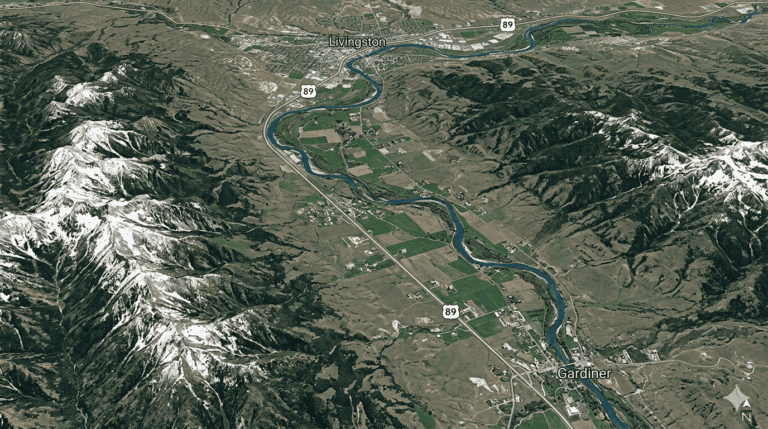
Drive 10 miles in any direction and that changes. Cell coverage drops off quickly outside of population centers, and there are large stretches of Park County, including parts of Paradise Valley and most of the Shields Valley, where you have no signal at all. The canyon between Livingston and Gardiner along Highway 89 has multiple dead zones where a flat tire or a medical issue means walking until you find reception.
Internet service follows a similar pattern. In town, broadband options exist. Outside of town, many properties rely on Starlink (approximately $120 per month plus a $499 equipment fee) or fixed wireless providers with variable speeds. DSL is technically available in some areas but often delivers speeds that make video calls unreliable.
If you work remotely, test internet at the specific property address before you make an offer. Not the neighborhood. Not the town. The specific address. Coverage can vary dramatically within a quarter mile.
What Surprises People About the Community?
This is where the first-year story turns. Most of the surprises listed above are adjustments, costs, or logistical realities that require calibration. The community surprise is different. It is the part that makes people stay.
Montana communities, and Livingston in particular, operate on a different social frequency than most metro areas. People wave to each other on back roads. The hardware store owner knows your name after your third visit. Your neighbor brings over firewood without being asked. The volunteer fire department hosts a pancake breakfast that half the town shows up to. The Murray Bar, Pine Creek Lodge, and the Shane Lalani Center host live music on weeknights that would cost $40 a ticket in a city and costs nothing here.
The warmth is genuine, but it is not instant. Montana communities have long memories and a natural wariness toward newcomers who arrive with opinions about how things should be done. The transplants who integrate fastest are the ones who show up, help out, and keep their comparisons to where they came from to themselves for the first year. Join the volunteer fire department. Attend the county fair. Shop at local businesses instead of driving to Bozeman for everything. The community will find you. You do not need to force it.
The loneliness caveat: For people who move to rural properties without an existing social network in the area, the first winter can be genuinely isolating. Geographic distance and limited social networks are documented challenges in rural Montana. If you are moving alone or as a couple without kids in school, be intentional about building connections before the first snowfall. The isolation that feels peaceful in August can feel heavy in February.
What Are the Honest Tradeoffs of the First Year?
Tradeoff 1: Summer euphoria versus winter reckoning.
Montana summers are intoxicating. The light, the rivers, the wildflowers, the 90-degree days followed by 55-degree nights. First-year residents who arrive in June sometimes buy property on summer emotions and face winter reality four months later. If you can, visit in January before you commit. A winter weekend in Livingston will tell you more about whether this life fits you than a summer week ever could.
Tradeoff 2: Space versus convenience.
You moved to Montana for the space, the quiet, the mountains. You will also drive 30 minutes for a gallon of milk, wait three weeks for a plumber, and discover that Amazon Prime “two-day delivery” means four to six days to your rural address. The space is real. The inconvenience is also real. They come as a package.
Tradeoff 3: Community warmth versus earning acceptance.
Montana communities are warm, but acceptance is earned through presence and contribution, not simply through arrival. The transplant who volunteers at the food bank and shows up at town council meetings is welcomed faster than the one who builds a house, installs a gate, and only drives to Bozeman. Integration is possible and rewarding, but it is not automatic.
Tradeoff 4: The identity shift.
This one is harder to name but real. Moving to Montana changes how you think about comfort, convenience, and what matters. Your definition of “far away” shifts. Your tolerance for weather expands. Your relationship with your neighbor becomes more important because you might need them to pull your truck out of a ditch. Some people find this liberating. Others find it uncomfortable. Both responses are honest.
What Steps Can You Take to Prepare for Year One?
Visit in winter before buying. Not December, when the holidays distract you. January or February, when the days are short, the wind is constant, and the roads are unpredictable. If you still want to be here after that visit, you are ready.
Build your service network before you need it. Find a plumber, an electrician, a well service company, and a snow removal contractor before the first emergency. In rural Montana, waitlists for tradespeople can run two to four weeks. Having relationships in place before you need them is not optional.
Budget a first-year adjustment fund. Set aside $3,000 to $5,000 for things you did not expect: snow tires, a generator, bear-proof garbage cans, a propane fill-up in November, a window repair after a wind storm, or a tow truck when you slide off a gravel road in March. These are not emergencies. They are the normal cost of settling in.
Join something local in the first 60 days. A church, a volunteer organization, a book club, a rec league, a regular table at a coffee shop. Isolation compounds. Connection compounds. Choose connection early.
Frequently Asked Questions
Is the wind in Livingston really that bad?
Yes. Livingston is the windiest city in Montana with a 15.2 mph annual average, and gusts of 30 mph or more occur 67% of the year. It is caused by pressure differentials between Yellowstone National Park and central Montana, with Livingston sitting at the mouth of the natural funnel. Secure outdoor items, expect higher heating costs, and plan for days when being outside is genuinely unpleasant.
How short are winter days in Montana?
On the winter solstice, Livingston gets 8 hours and 40 minutes of daylight, with the sun setting as early as 4:39 PM in December. The flip side: summer days stretch to 15 hours and 42 minutes, with sunset after 9 PM in June. The 7-hour swing between seasons is dramatic and affects mood, energy, and daily routines.
Do I need to worry about bears on my property?
If you live outside of town, yes. Montana Fish, Wildlife and Parks logged 61 grizzly bear conflicts in 2025, and grizzly range continues expanding. Secure garbage, remove bird feeders seasonally, carry bear spray, and learn basic coexistence practices. Most encounters are preventable with proper attractant management.
How is healthcare access in rural Park County?
Livingston has a critical access hospital with emergency and primary care services. Specialist care requires driving to Bozeman (25-35 minutes) or Billings (2 hours). Montana received $233 million in 2026 through the Rural Health Transformation Program, but improvements will take time.
Is cell service reliable outside of Livingston?
No. Cell coverage drops off quickly outside population centers, with dead zones in parts of Paradise Valley, the Shields Valley, and the Highway 89 canyon toward Gardiner. Test coverage at your specific property address before buying.
How long does it take to feel like part of the community?
Most transplants report feeling genuinely integrated after 18 to 24 months, provided they make consistent effort to participate in local life. Volunteering, shopping locally, attending community events, and being helpful to neighbors accelerates the timeline. Arriving with strong opinions about how the town should change slows it down.
What should I budget for the first year beyond the purchase price?
Budget $3,000 to $5,000 for first-year adjustment costs: snow tires ($600-$1,200 for two vehicles), a generator ($500-$2,000), bear-proof garbage containers ($200-$400), propane fill ($1,000-$2,000 for the first fill), and unexpected repairs from wind or weather. These are normal settling-in costs, not emergencies.
Do people actually regret moving to Montana?
Some do. The ones who regret it most often made the decision based on a summer visit, underestimated the isolation, or expected Montana to be a more convenient version of wherever they came from. The ones who stay and thrive came with realistic expectations, built community early, and found something in the landscape and the lifestyle that made the tradeoffs worth it. Montana rewards people who meet it on its own terms.
About the Author
Stacy Bennin is a licensed real estate broker in Montana, affiliated with Legacy Lands Real Estate in Paradise Valley. She helps buyers and sellers across Park County and southwest Montana find property that fits their needs, and stays current on AI and emerging technology so her clients benefit from where real estate is headed, not just where it has been. Reach her at stacyadell.com or (406) 224-3267.